An anti-inflammatory diet for joints: the tips to pair with Curafen

Published August 2026 · reviewed by the Curafen Research Team. We are an independent information resource, not a medical provider, and this article is educational rather than medical advice.
An anti-inflammatory diet for joints is an everyday eating pattern built on colourful vegetables, fruit, whole grains, beans, nuts, olive oil, oily fish and warming spices such as turmeric and ginger — the same two spices concentrated in a daily Curafen capsule. It is not a special cleanse or a short-term plan; it is a way of filling your plate most days that supports comfortable, mobile joints alongside, not instead of, your doctor’s care.
How to eat for calmer, more comfortable joints — and where Curafen fits.
- The idea
- Eat mostly whole, colourful foods and cook with turmeric and ginger; limit ultra-processed foods and added sugar. The pattern matters more than any single meal.
- Star foods
- Oily fish, extra-virgin olive oil, leafy greens, berries, cruciferous vegetables, nuts, beans and whole grains do the heavy lifting.
- The spice angle
- Turmeric (curcumin) and ginger (gingerol) are the culinary botanicals with the most joint-wellness research behind them.
- Where Curafen fits
- One capsule concentrates standardized turmeric, ginger and BioPerine — a convenient top-up to a whole-food plate, not a replacement for it.
If your joints feel their best on the days you eat well and their stiffest after a run of takeout, you already know food is part of the picture. An anti-inflammatory plate is not restrictive or exotic — it is close to the Mediterranean way of eating that nutrition scientists keep circling back to.

What is an anti-inflammatory diet for joints?
An anti-inflammatory diet for joints is a whole-food eating pattern that leans on plants, healthy fats and lightly used spices to help keep the body’s everyday inflammatory balance in check. Rather than chasing one miracle ingredient, it stacks small, sensible choices: more vegetables and fruit, more fibre and unsaturated fat, fewer ultra-processed foods and less added sugar. Researchers often describe it as a Mediterranean-style pattern, and the point is not perfection — it is what you eat most days, most of the time.
Why does what you eat affect your joints?
What you eat affects your joints because diet is one of the levers that nudges the body’s background level of inflammation up or down. A plate rich in colourful produce delivers antioxidant plant compounds and fibre, while oily fish and olive oil provide the unsaturated fats linked with a healthier inflammatory profile. A steady diet of sugary drinks and ultra-processed foods, by contrast, is associated in observational research with higher inflammatory markers. Carrying less weight also means each knee and hip bears a lighter load, so food quietly influences comfort from several directions at once.
Which foods belong on an anti-inflammatory plate?
The most anti-inflammatory foods are the colourful, minimally processed ones: oily fish, extra-virgin olive oil, leafy greens, berries, cruciferous vegetables, nuts, beans and whole grains, seasoned generously with herbs and spices. Think of your plate in thirds — half plants, a quarter whole grains or legumes, a quarter protein — and let colour be your shopping list.
| Food group | Everyday examples | Why it earns a place |
|---|---|---|
| Oily fish | Salmon, sardines, mackerel | Natural source of omega-3 fats that feature in anti-inflammatory eating patterns. |
| Leafy & cruciferous veg | Spinach, kale, broccoli | Fibre plus antioxidant plant compounds; the backbone of the plate. |
| Berries & colourful fruit | Blueberries, cherries, oranges | Polyphenols and vitamin C for general wellness and colour on the plate. |
| Healthy fats | Extra-virgin olive oil, avocado, walnuts | Unsaturated fats that replace less helpful saturated and processed fats. |
| Whole grains & beans | Oats, quinoa, lentils, chickpeas | Slow-release fibre that steadies blood sugar and feeds a healthy gut. |
| Spices | Turmeric, ginger, garlic, cinnamon | Flavour with a wellness tradition — turmeric and ginger lead the pack. |
Notice how ordinary this is. There are no powders you have never heard of and nothing you cannot buy at a normal supermarket — which is exactly why the pattern is realistic to keep up. For a deeper food-by-food list, see our guide to the best foods for joint pain and inflammation.

How do turmeric and ginger fit a joint-friendly diet?
Turmeric and ginger are the two culinary spices with the most joint-wellness research behind them, and they are the natural bridge between a good diet and a targeted supplement. Turmeric’s active compound, curcumin, is one of the most studied plant polyphenols; ginger is a natural source of gingerol. Both have long been used in cooking and traditional wellness, and both are easy to work into everyday meals — a pinch of turmeric in scrambled eggs, fresh ginger grated into a stir-fry, a warming turmeric-ginger tea in the evening. Readers usually go from here to our guide on antioxidants and joint health.
Why do turmeric and black pepper work better together?
The catch is dose and absorption. The amount of curcumin in a typical curry is modest, and curcumin on its own is poorly absorbed. Two kitchen tricks help: cooking turmeric with a little fat, and pairing it with black pepper, whose piperine markedly improves curcumin uptake. That pepper-and-turmeric partnership is the same logic behind a standardized capsule. Our explainer on turmeric and curcumin for joint pain goes deeper.

Concentrate the spices your plate can’t
Curafen pairs standardized turmeric and ginger with BioPerine black pepper for absorption — the exact partnership dietitians describe, in one daily capsule. See the exact dose in Curafen and the best-value six-bottle bundle at $49 per bottle, with free U.S. shipping and a 60-day guarantee.
Check today’s Curafen pricing →Which foods are worth limiting?
The foods most worth limiting for joint comfort are the ultra-processed ones: sugary drinks, sweets, refined white carbohydrates, heavily fried foods and a heavy hand with alcohol. Observational studies link diets high in these with raised inflammatory markers, and they crowd out the vegetables, fibre and healthy fats that do the useful work.
What are the easiest swaps to start with?
The realistic goal is not a banned list you will resent within a week, but a steady swap: sparkling water for soda, olive oil for margarine, whole fruit for dessert, home cooking for takeout more often than not. Progress here is measured in habits, not single meals.
| Instead of… | Reach for… | Why the swap helps |
|---|---|---|
| Sugary soda or juice | Water, sparkling water, herbal tea | Cuts added sugar, a driver of higher inflammatory markers. |
| White bread & refined snacks | Oats, whole grains, nuts | More fibre and steadier blood sugar. |
| Deep-fried sides | Roasted or steamed vegetables | Swaps processed fats for plants and antioxidants. |
| Processed deli meats | Fish, beans, eggs, poultry | Leaner protein with fewer additives and less salt. |
| Dessert most nights | Berries or fruit with yoghurt | Keeps the sweet habit while adding polyphenols and fibre. |
How do you build an anti-inflammatory day, meal by meal?
A joint-friendly day is easier to picture as meals than as rules, so here is one simple template you can bend to your own tastes.
What does a sample joint-friendly day look like?
- Breakfast: oats topped with berries and walnuts, or eggs with spinach and a pinch of turmeric.
- Lunch: a big colourful salad or grain bowl with beans, olive oil and plenty of vegetables.
- Snack: a handful of nuts, or carrot sticks with hummus — fibre and healthy fat.
- Dinner: oily fish or a lentil curry with a ginger-and-turmeric base and lots of veg.
- Drink: water through the day, with a warming turmeric-ginger tea in the evening.
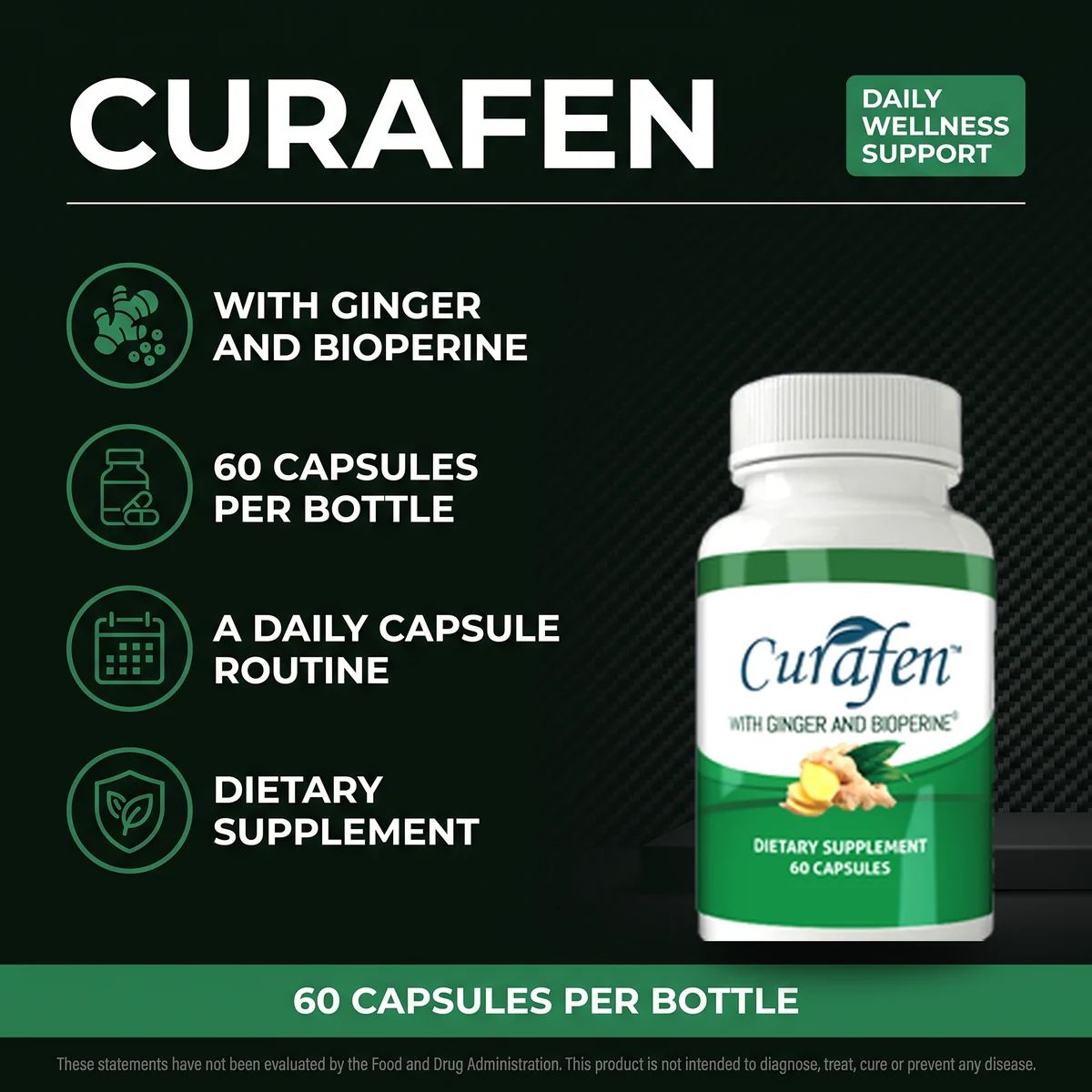
- Supplement step: one Curafen capsule with a meal, at the same time daily, for a consistent turmeric-ginger dose.
How long before a joint-friendly diet makes a difference?
A whole-food, anti-inflammatory diet works gradually, so patience is part of the plan. Some people notice steadier energy and a general sense of comfort within a couple of weeks of eating more plants and fewer processed foods, while the broader benefits build over several weeks to months. Botanicals such as turmeric follow the same slow curve, which is why most people keep them going for a few months rather than judging them in a week. Individual results vary, and food is a support to comfortable joints rather than a treatment for any condition.

When should you talk to a doctor?
A joint-friendly diet supports everyday comfort; it is not a substitute for medical care. Speak with your doctor or a registered dietitian before making big dietary changes or starting a supplement if you are pregnant or nursing, under 18, take any medication (especially a blood thinner, since turmeric and ginger can affect bleeding), have a diagnosed condition such as gallstones or diabetes, or notice a hot, swollen or locked joint or pain that keeps getting worse. Personalised advice always beats a generic plan.
Frequently asked questions
What is an anti-inflammatory diet for joints?
An anti-inflammatory diet for joints is an eating pattern built on colourful vegetables, fruit, whole grains, beans, nuts, olive oil, oily fish and spices such as turmeric and ginger, while limiting ultra-processed foods and added sugar. It supports everyday comfort and general wellness, and works alongside medical care rather than replacing it.
Which foods are the most anti-inflammatory?
Oily fish, extra-virgin olive oil, leafy greens, berries, cruciferous vegetables, nuts, beans and whole grains are among the most studied anti-inflammatory foods, along with turmeric and ginger. No single food is a cure; the benefit comes from the overall pattern followed consistently.
Do turmeric and ginger really help with joint comfort?
Turmeric’s curcumin and ginger’s gingerol are well-studied plant compounds traditionally used for everyday joint wellness. They support a healthy diet rather than treating any condition, and curcumin absorbs far better when paired with black-pepper piperine, as it is in Curafen.
How does Curafen fit into an anti-inflammatory diet?
Curafen is a once-daily capsule of standardized turmeric, ginger and BioPerine that concentrates two kitchen spices you would otherwise struggle to eat in useful amounts. It is a convenient supplement to a whole-food, anti-inflammatory plate, not a substitute for it.
Which foods should I limit for joint comfort?
Most guidance points to limiting ultra-processed foods, sugary drinks, refined carbohydrates, excess alcohol and heavily fried foods, since these are linked with higher inflammatory markers. Swapping them for whole-food alternatives matters more than any single perfect meal.
How long before an anti-inflammatory diet makes a difference?
Some people notice steadier energy and comfort within a couple of weeks, while the broader benefits of a whole-food pattern build over several weeks to months. Botanicals such as turmeric work gradually too, and individual results vary.
See the exact turmeric-ginger dose in Curafen →
Curafen is a dietary supplement, not a treatment for any medical condition. These statements have not been evaluated by the Food and Drug Administration. This product is not intended to diagnose, treat, cure or prevent any disease. Always consult a qualified healthcare professional about your individual needs.
References & further reading
- National Center for Complementary and Integrative Health (NCCIH). Turmeric. nccih.nih.gov/health/turmeric
- National Center for Complementary and Integrative Health (NCCIH). Ginger. nccih.nih.gov/health/ginger
- Harvard T.H. Chan School of Public Health, The Nutrition Source. Diet Review: Anti-Inflammatory Diet. nutritionsource.hsph.harvard.edu
- Mayo Clinic. Mediterranean diet: A heart-healthy eating plan. mayoclinic.org
- Examine.com. Curcumin — evidence-based summary. examine.com/supplements/curcumin
- Barbaresko J, Koch M, Schulze MB, Nöthlings U. Dietary pattern analysis and biomarkers of low-grade inflammation: a systematic literature review. Nutrition Reviews, 2013. Barbaresko et al. — Dietary patterns and biomarkers of low-grade inflammation (Nutrition Reviews, 2013)
These references describe the foods and ingredients in general terms and do not constitute evidence that any product treats, cures or prevents any condition.
Keep reading: how to support healthy joints naturally · the best foods for joint pain · read the full Curafen review · back to the Curafen blog.