Curcumin absorption: how Curafen's BioPerine helps turmeric work

Updated September 2026 · reviewed by the Curafen Research Team. We are an independent information resource, not a medical provider, and this article is educational rather than medical advice.
Curcumin absorption is the process by which the active turmeric compound actually crosses from your gut into your bloodstream — and on its own, curcumin is notoriously bad at it. Most of a plain turmeric dose is poorly dissolved, quickly broken down and rapidly cleared, so relatively little reaches the tissues. That single fact is why serious turmeric formulas are built around absorption, and why Curafen pairs its curcumin with BioPerine black pepper and a simple habit: take it with a meal that has a little fat.
Why curcumin needs help — and how Curafen provides it.
- The problem
- Plain curcumin has low bioavailability: it dissolves poorly in water and is broken down and cleared before much of it can be used.
- The pepper fix
- Piperine from black pepper — standardized as BioPerine — is studied for slowing that breakdown, so more curcumin stays in circulation.
- The food fix
- Curcumin is fat-soluble, so taking it with a meal containing some fat helps carry it along for the ride.
- How Curafen uses this
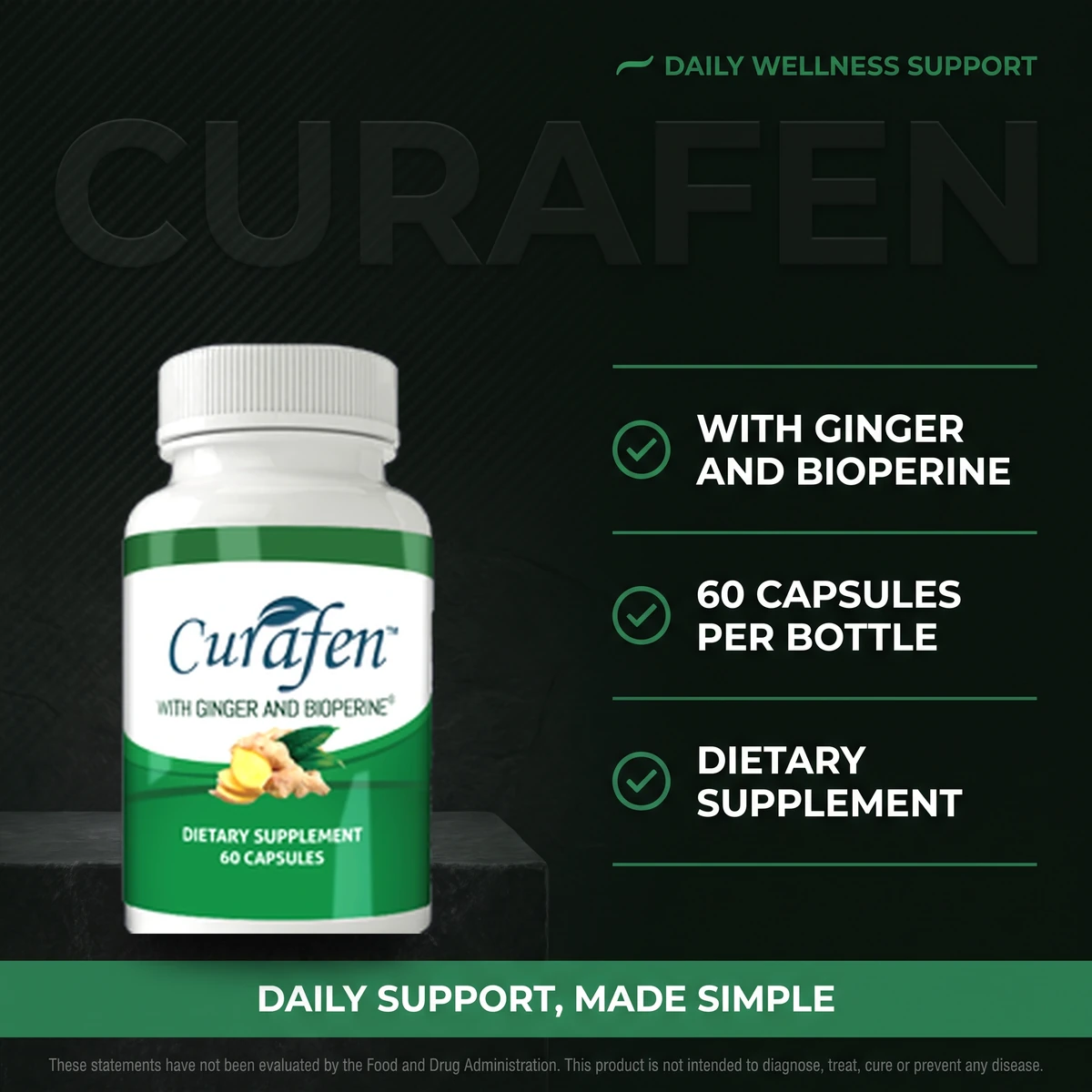
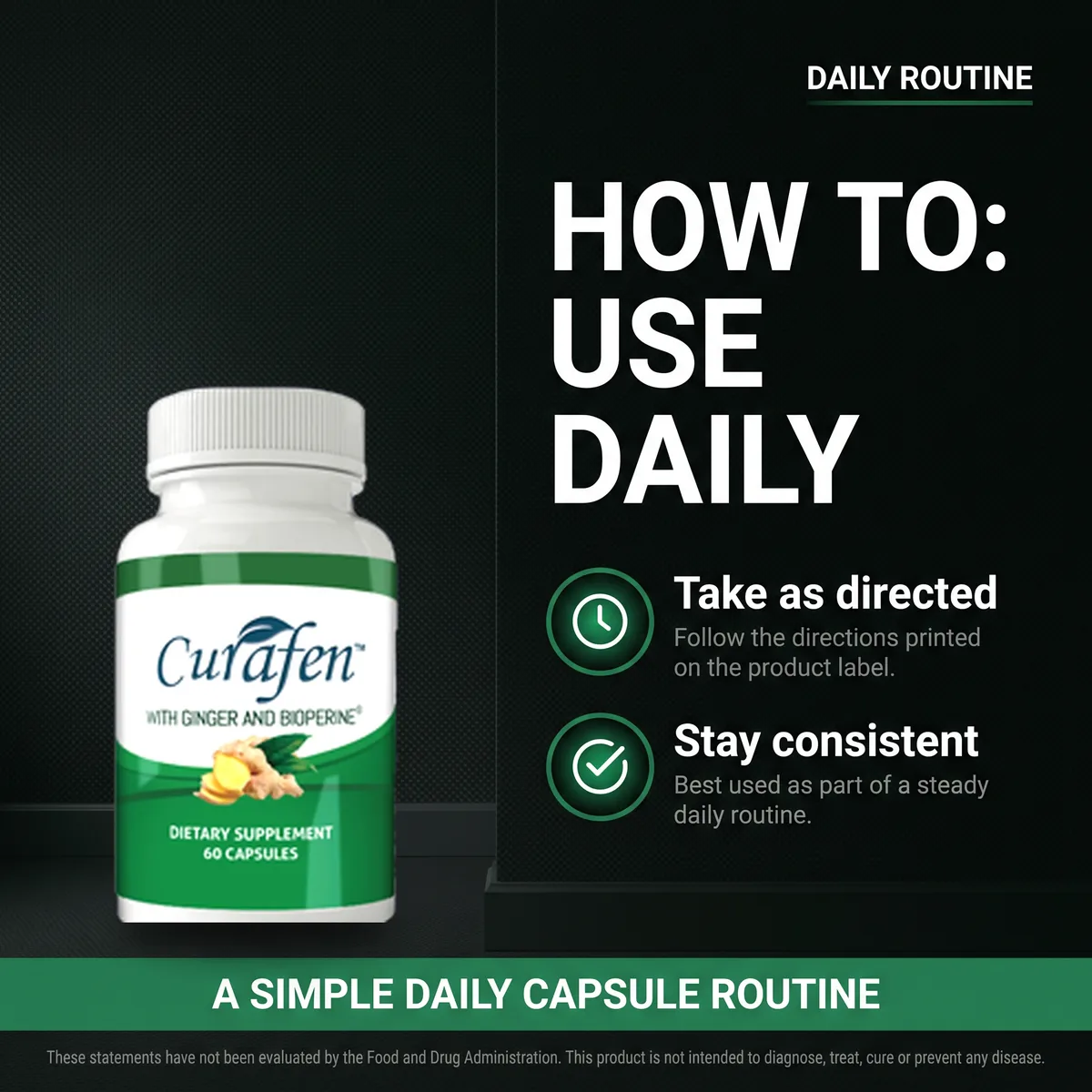
- Each capsule combines standardized turmeric curcumin, ginger and BioPerine, taken once daily with food.
Turmeric has been a kitchen staple for centuries, but modern interest centres on one molecule: curcumin, the yellow polyphenol that gives the spice its colour. The catch is that swallowing curcumin and benefiting from it are two very different things, because the body is remarkably good at getting rid of it — which is why a formula like Curafen looks the way it does.

What does curcumin absorption actually mean?
Curcumin absorption refers to how much of the curcumin you swallow is successfully taken up into your bloodstream and made available to the body, a property scientists call bioavailability. A capsule can hold a generous amount and still deliver very little if the digestive system cannot dissolve, transport and hold onto it — and with curcumin, bioavailability is the central challenge rather than a footnote.
Researchers who measure curcumin in the blood after an oral dose consistently report low, short-lived levels. The molecule is hydrophobic — it does not mix well with water — and whatever is absorbed is processed rapidly and cleared, so it is interesting in the lab but hard to deliver in a glass of turmeric tea.
Why is curcumin so hard to absorb on its own?
Plain curcumin is poorly absorbed because of a stack of obstacles that all push the same way: low solubility, fast metabolism and quick elimination. No single one is fatal, but together they mean a large share of an ordinary turmeric dose passes through without contributing much. Breaking the problem into its parts makes the solutions obvious.
It barely dissolves in water
Curcumin is fat-loving and water-fearing. In the watery conditions of the stomach and intestine it tends to clump rather than dissolve, and a compound that will not go into solution cannot easily cross the gut lining. This is the first and biggest bottleneck.
The body breaks it down quickly
What little curcumin does get across is rapidly transformed by enzymes in the gut wall and liver — a process called glucuronidation — into forms that are easier to excrete. This fast first-pass metabolism trims the intact curcumin that reaches circulation.
It is cleared before it can accumulate
Finally, curcumin and its by-products are eliminated quickly, so any levels that rise tend to fall again within hours. Without help, it is hard for a normal-sized dose to reach and hold a meaningful concentration.
How does black pepper (piperine) improve curcumin uptake?
Piperine, the pungent compound in black pepper, improves curcumin uptake mainly by slowing the enzymes that would otherwise break curcumin down and clear it, giving more of each dose time to stay in circulation. It is one of the most studied natural absorption enhancers — the reason black pepper turns up alongside turmeric in traditional cooking and modern formulas alike. In supplement form it is often standardized as BioPerine, a branded black-pepper extract with a consistent piperine content.
The most cited evidence is an early human study in which volunteers took curcumin with and without a small amount of piperine; when piperine was added, the measured curcumin in the blood rose dramatically. It is a single, small study rather than the final word, and the exact magnitude should be read with caution — but it helped establish why piperine became a near-standard partner for curcumin, and the mechanism of slowed breakdown is biologically sensible.
| Absorption barrier | What happens | How Curafen's design responds |
|---|---|---|
| Poor solubility | Curcumin clumps in water and resists dissolving in the gut. | Standardized curcumin extract plus the advice to take it with a fat-containing meal. |
| Fast breakdown | Gut and liver enzymes quickly convert curcumin for excretion. | BioPerine (piperine) is included to help slow that breakdown. |
| Rapid clearance | Curcumin and its by-products leave the body fast. | Consistent once-daily dosing to keep the routine steady over time. |
| Weak spice dose | Culinary turmeric is only a few percent curcumin. | A concentrated, standardized extract rather than kitchen powder. |
See the exact dose in Curafen
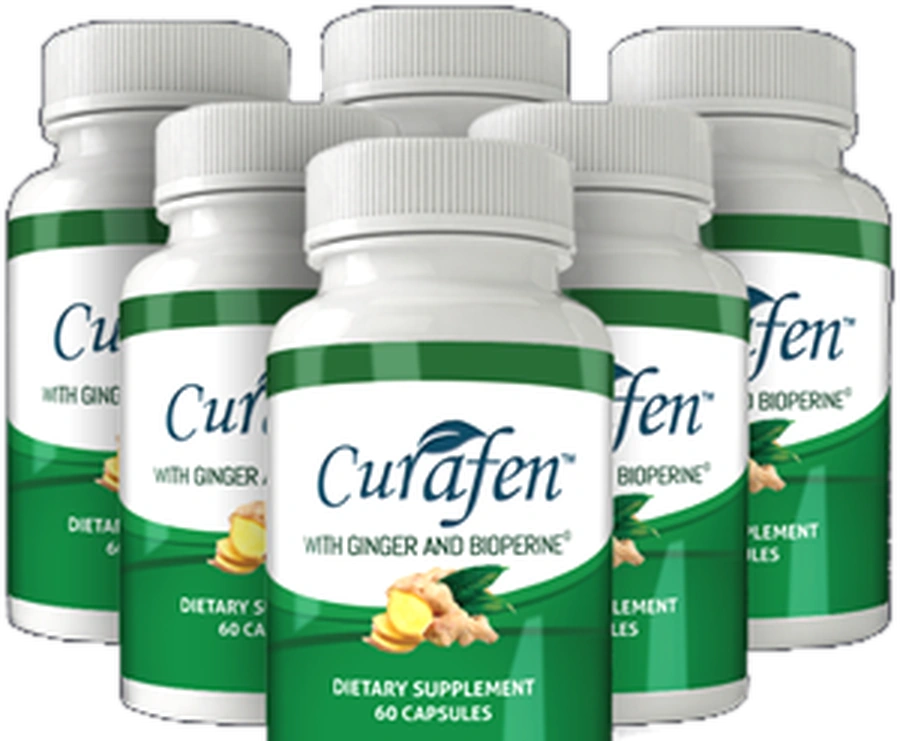
Curafen pairs standardized turmeric curcumin with ginger and BioPerine in one daily capsule, so absorption is built into the formula rather than left to chance. The six-bottle bundle is the best value at $49 per bottle, with free U.S. shipping and a 60-day guarantee.
Check today's Curafen pricing — from $49/bottleDoes taking curcumin with fat and food help?
Taking curcumin with a meal that contains a little fat can help because curcumin is fat-soluble, so a fatty environment gives it something to dissolve into during digestion — the same logic behind taking a fat-soluble vitamin with food. You do not need a heavy meal; a normal breakfast or lunch with some olive oil, eggs, nuts, dairy or fish is the everyday context curcumin prefers.
Combining the two helpers is the practical takeaway: piperine to slow the breakdown, dietary fat to aid initial uptake. Neither is a magic switch, but together they are the most sensible, low-effort way to get more from the curcumin you take — which is why the simplest instruction for Curafen, one capsule daily with a meal, is quietly doing absorption work.
How much curcumin is really in turmeric?
Culinary turmeric powder is only about two to five percent curcumin by weight, so a pinch in a curry or latte delivers a fairly small amount of the active compound. That is fine for flavour, but it explains why concentrated, standardized extracts are a separate category: they provide a defined amount of curcumin rather than the variable trace in the spice rack. A supplement standardized to a set curcuminoid content, paired with a standardized piperine source like BioPerine, gives a predictable dose from capsule to capsule — and that consistency is what a thoughtful formula is really selling.
| Source | Typical curcumin content | Absorption context |
|---|---|---|
| Fresh turmeric root | Low; mostly water and fibre | Tasty, but a small curcumin dose per serving. |
| Dried turmeric spice | Roughly 2–5% curcumin | Great for cooking; add black pepper for the classic pairing. |
| Turmeric tea / latte | Variable, usually modest | Some fat from milk helps a little; still a light dose. |
| Standardized extract (e.g. Curafen) | Concentrated curcuminoids | Paired with BioPerine and taken with food for uptake. |
For the wider picture, our guide on turmeric and curcumin for joint pain puts the ingredient in context, and how to support healthy joints naturally covers the habits that sit alongside any supplement.
How does Curafen put these absorption principles together?
Curafen is a once-daily capsule combining standardized turmeric curcumin, ginger root and BioPerine, so the three levers of the absorption story — a concentrated dose, a piperine partner and a fat-friendly food instruction — are handled in one product. See the full breakdown in the ingredients section or read our complete Curafen review.
None of this makes curcumin a treatment for any condition, and the evidence has limits: much of the absorption research involves small studies, lab models or short timeframes, and results in real people vary. What can be said fairly is that pairing curcumin with piperine and food is a rational, well-established way to address its best-known weakness — and Curafen is designed around exactly that.
When should you talk to a doctor?
Turmeric, curcumin and piperine are food-derived compounds, but that does not make them right for everyone in supplement form. Speak with your doctor before starting Curafen or any curcumin supplement if you are pregnant or nursing, under 18, take any medication — especially a blood thinner or a drug with a narrow dosing window, since piperine can affect how some medicines are processed — have gallbladder issues, or have a diagnosed health condition.
Frequently asked questions
Why is curcumin so poorly absorbed on its own?
Plain curcumin dissolves badly in water, is broken down quickly in the gut and liver, and is cleared from the body fast, so most of a raw turmeric dose never reaches the bloodstream. This is why absorption helpers such as piperine and dietary fat are so widely discussed.
How does BioPerine help curcumin absorption?
BioPerine is a standardized black-pepper extract rich in piperine, a compound studied for slowing how quickly the body breaks down and clears curcumin. In one often-cited study, adding a small amount of piperine raised measured curcumin levels substantially compared with curcumin alone.
Should I take Curafen with food?
Most people take Curafen once daily with a meal that contains a little fat, because curcumin is fat-soluble and tends to be carried more effectively when there is some fat present. Following the label and taking it consistently matters more than timing it perfectly.
Does black pepper in food do the same thing as BioPerine?
Ordinary black pepper contains piperine, but the amount varies and is usually small. BioPerine is standardized to a consistent piperine content, so each Curafen capsule delivers a predictable amount alongside the turmeric and ginger.
How much curcumin is in a turmeric spice compared with a supplement?
Culinary turmeric powder is only a few percent curcumin by weight, so a pinch in cooking provides a modest amount. Standardized supplements like Curafen concentrate the curcumin and add piperine, which is why they are discussed separately from the kitchen spice.
Is more curcumin always better for absorption?
Not necessarily. Because uptake is limited by how the body processes curcumin, simply swallowing a very large dose does not reliably raise blood levels. Pairing a sensible dose with piperine and food is the approach most formulas, including Curafen, are built around.
See the exact dose in Curafen — try it risk-free for 60 days →
Curafen is a dietary supplement, not a treatment for any medical condition. These statements have not been evaluated by the Food and Drug Administration. This product is not intended to diagnose, treat, cure or prevent any disease. Always consult a qualified healthcare professional about your individual needs.
References & further reading
- National Center for Complementary and Integrative Health (NCCIH). Turmeric. nccih.nih.gov/health/turmeric
- Shoba G, et al. Influence of piperine on the pharmacokinetics of curcumin in animals and human volunteers. PubMed / U.S. National Library of Medicine. pubmed.ncbi.nlm.nih.gov/9619120
- Anand P, et al. Bioavailability of curcumin: problems and promises. PubMed / U.S. National Library of Medicine. pubmed.ncbi.nlm.nih.gov/17999464
- Examine.com. Curcumin — evidence-based summary. examine.com/supplements/curcumin
- National Center for Complementary and Integrative Health (NCCIH). Black Pepper & Turmeric — herbs at a glance. nccih.nih.gov/health/herbsataglance
These references describe the ingredients in general terms and do not constitute evidence that any product treats, cures or prevents any condition.
Keep reading: turmeric and curcumin for joint pain · the best foods for joint pain · back to the Curafen blog · homepage.