Ginger for joint pain: what Curafen's ginger root does

Updated September 2026 · reviewed by the Curafen Research Team. We are an independent information resource, not a medical provider, and this article is educational rather than medical advice.
Ginger for joint pain refers to the traditional, everyday use of ginger root — and its naturally occurring gingerol compounds — to help support comfortable, mobile joints as part of a wider movement-and-diet routine. Ginger is one of the three actives in Curafen, sitting beside standardized turmeric and BioPerine, and it is a support to healthy habits rather than a treatment for any condition.
Does ginger help joints, and what is its job in Curafen?
- Honest answer
- Ginger is a well-studied kitchen botanical used for centuries for everyday comfort; in Curafen it supports a healthy routine and is not a treatment for any condition, with results varying from person to person.
- The active compounds
- Gingerols — especially 6-gingerol — are the pungent antioxidant molecules that put ginger in the joint-wellness conversation.
- Why beside turmeric
- Ginger and turmeric are cousins with complementary antioxidant compounds, so Curafen pairs both rather than choosing one.
- How to use it
- One Curafen capsule daily with a meal, alongside gentle movement, a healthy weight and a colourful, whole-food diet.
If turmeric is the headline in most joint-comfort formulas, ginger is the quiet partner that has earned its place beside it for thousands of years. This deep dive looks at what ginger root actually is, what its gingerols do, why it appears alongside turmeric and curcumin in Curafen, and how honest the evidence really is.
What is ginger root, and why is it in Curafen?
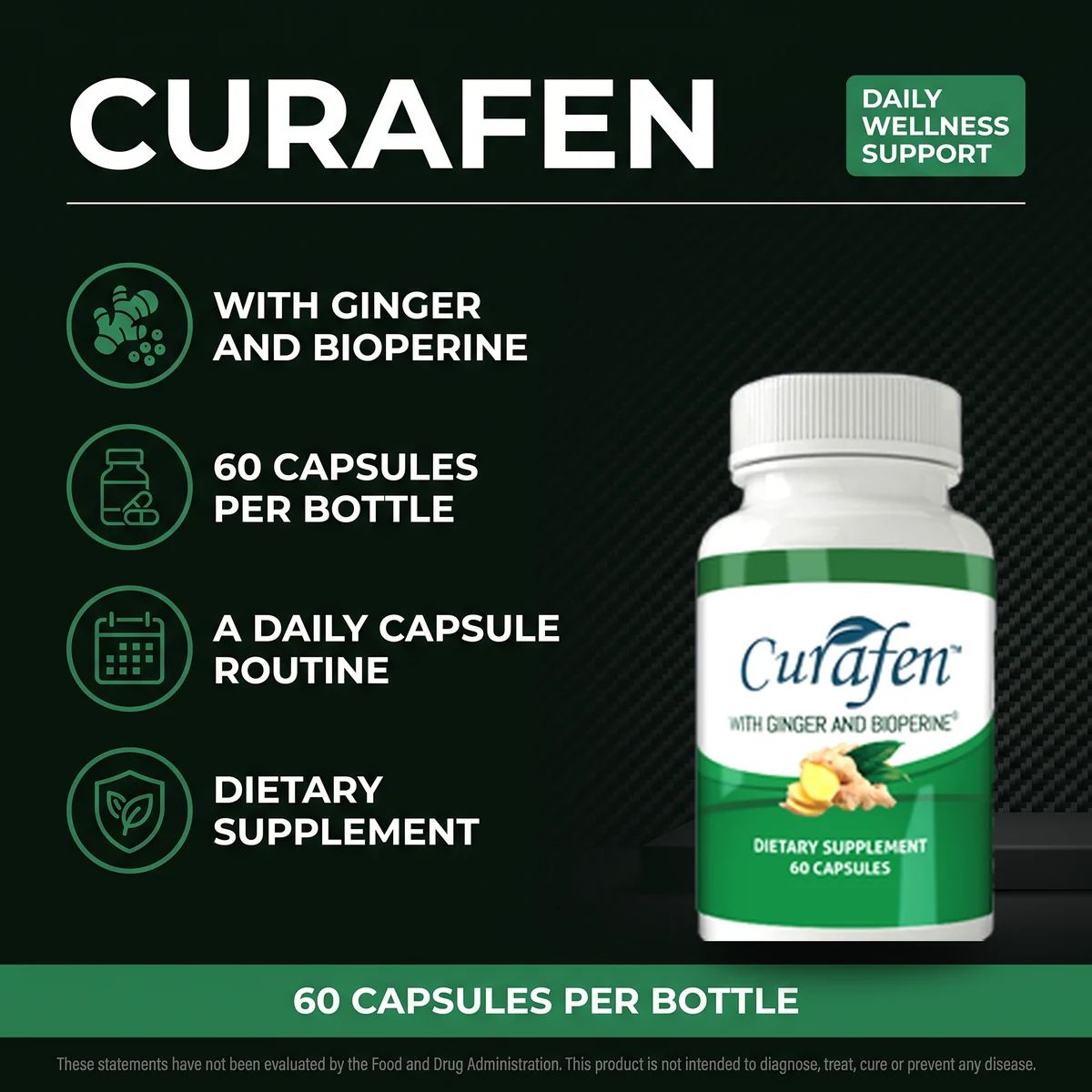
Ginger root is the underground stem (rhizome) of Zingiber officinale, a flowering plant whose warm, pungent flavour has made it a kitchen and wellness staple across Asia for millennia. It sits in the same botanical family as turmeric, which is one reason the two are so often used together. In Curafen, ginger is not a filler or a flavouring — it is one of three deliberate actives, chosen so that a single daily capsule can carry both turmeric's curcumin and ginger's gingerols, with BioPerine added to help the body absorb the curcumin.
The appeal of ginger is that it is both familiar and food-derived. People have cooked with it, brewed it and taken it for comfort for so long that its everyday use is unusually well documented for a botanical. That long history is exactly why it belongs in a focused formula built around whole-plant, traditional-use ingredients rather than a long, unfocused blend.
What are gingerols, and what do they do?
Gingerols are the main pungent, antioxidant compounds in fresh ginger root, and 6-gingerol is the most abundant of them. When researchers discuss ginger's traditional role in everyday wellness, gingerols are the naturally occurring plant molecules they are usually pointing to. Think of them as ginger's signature actives, the way curcumin is turmeric's.
How do gingerols differ from curcumin?
Gingerols and curcumin are both plant polyphenols with antioxidant behaviour, but they come from different plants and have different chemistry. That difference is the point: pairing them means a formula is not leaning on a single compound. In Curafen, curcumin brings turmeric's contribution and gingerols bring ginger's, so the two actives complement rather than duplicate each other.
What happens to gingerols when ginger is dried?
When ginger is dried, some gingerols convert into related compounds called shogaols, which is why dried and fresh ginger can taste and behave a little differently. A quality supplement standardises its ginger so that each capsule delivers a consistent amount of these compounds, rather than the variable dose you would get from a slice of root or a cup of tea.
How does ginger support everyday joint comfort?
Ginger supports everyday joint comfort in the way most food-derived botanicals do: as one helpful input among many, rather than as a switch that turns discomfort off. Its gingerols contribute antioxidant activity, and its long culinary history means it fits easily into a daily routine. What ginger does not do is replace the fundamentals — movement, a healthy weight, strength and sleep — that carry the most weight for joint comfort.
This is the honest frame worth keeping. A capsule of ginger and turmeric is the supplement step in a bigger picture, and it works best when the picture is already reasonably complete. If you want the full routine ginger fits into, our guide on supporting healthy joints naturally lays out the biggest levers in order of impact.
Is ginger only useful for joints?
No — and that is part of its appeal. Ginger has traditionally been used for digestive comfort and general wellness too, which is one reason so many people are happy to take it daily. In the context of Curafen, though, its role is specific: to sit beside turmeric as part of a joint-comfort routine, contributing its own antioxidant compounds to the mix.
See the exact dose in Curafen
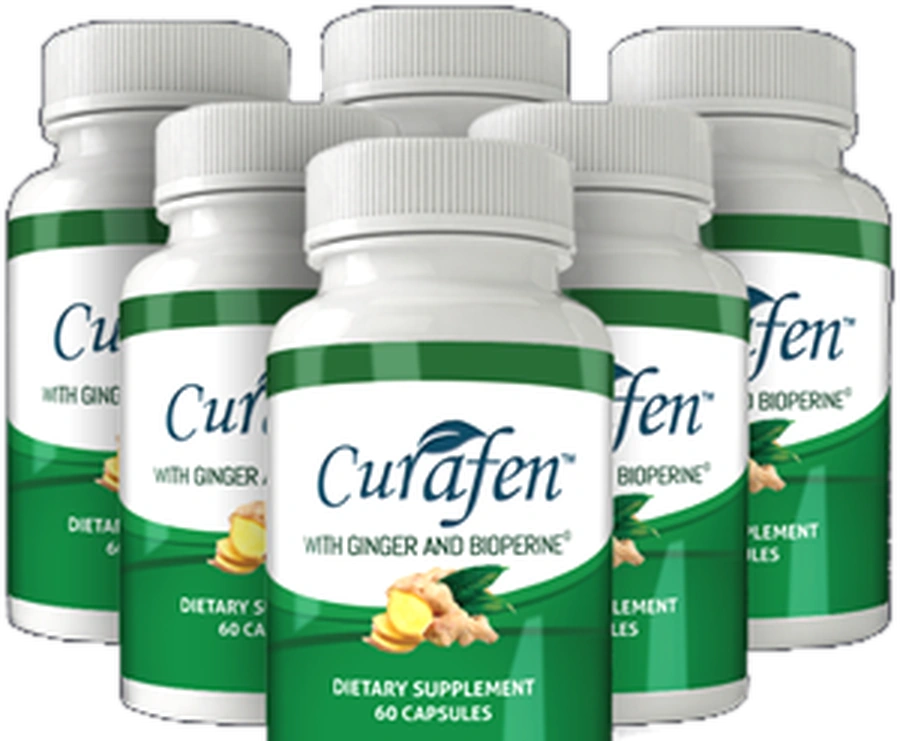
Curafen is a once-daily capsule pairing ginger root and standardized turmeric with BioPerine for absorption. The six-bottle bundle is the best value at $49 per bottle, with free U.S. shipping and a 60-day guarantee.
Check today's Curafen pricing — from $49/bottleWhy does ginger sit beside turmeric in Curafen?
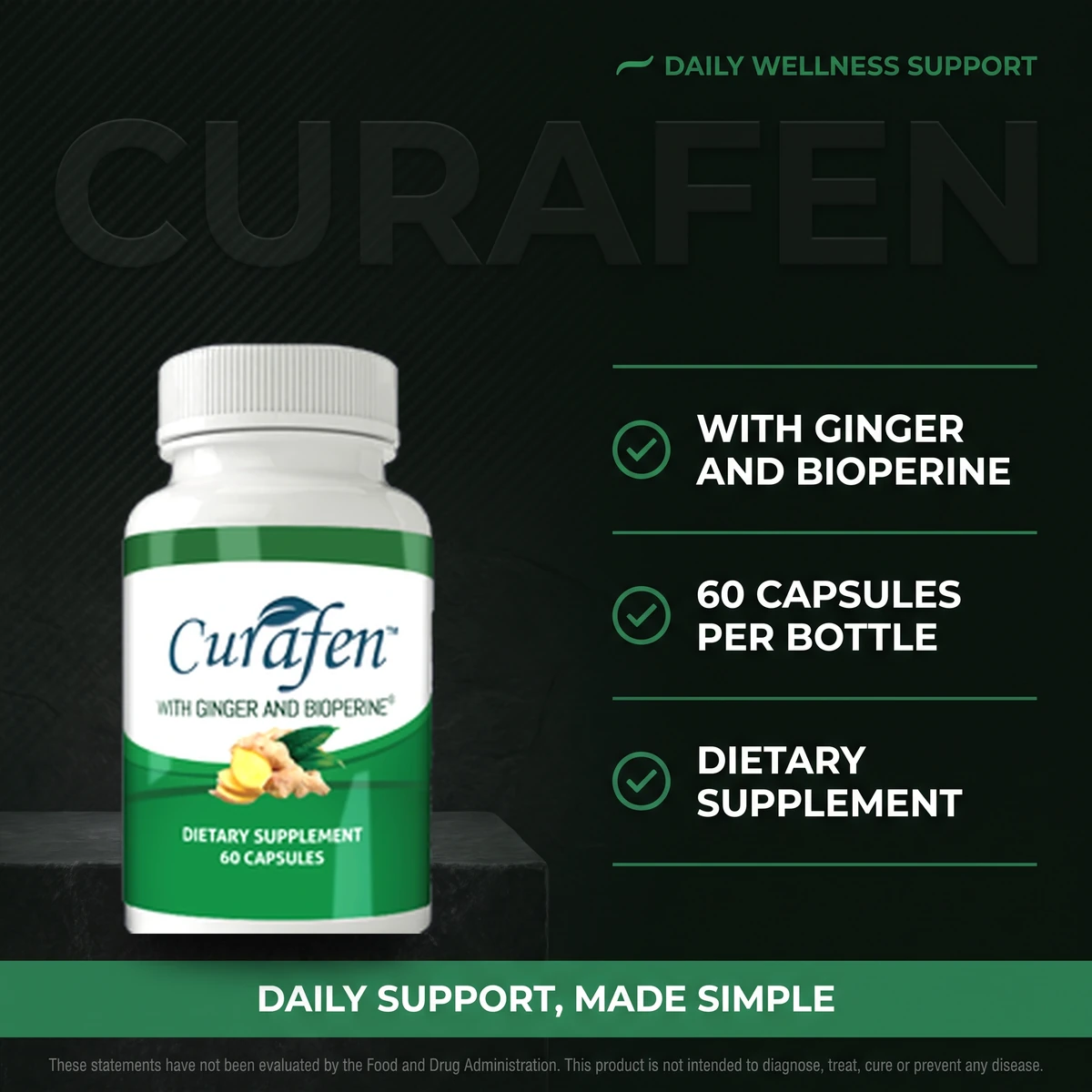
Ginger sits beside turmeric in Curafen because the two are complementary botanical cousins, not competitors, and using both means the formula is not resting on a single compound. Turmeric contributes curcumin; ginger contributes gingerols; BioPerine, from black pepper, is included to help the body absorb more of the curcumin from each dose. The result is a focused three-ingredient capsule rather than a sprawling blend.
| Active | Plant source | Signature compounds | Role in Curafen |
|---|---|---|---|
| Turmeric | Curcuma longa root | Curcumin (a polyphenol) | The headline antioxidant active, traditionally used for everyday joint wellness. |
| Ginger | Zingiber officinale root | Gingerols & shogaols | Complementary antioxidant botanical with a long culinary and wellness history. |
| BioPerine | Black-pepper extract | Piperine | Included to help the body absorb curcumin, so more of each dose is put to use. |
Because ginger and turmeric are so often paired in traditional cooking and wellness, combining them in one capsule mirrors how people have used them for centuries — just standardised and measured. You can see how all three actives appear together in the ingredients section of our full Curafen review.
How much ginger is in Curafen, and how do you take it?
Curafen is a once-daily capsule, and the simplest way to use it is to take one with a meal at the same time each day so it becomes automatic. Because formulas can be updated, the exact milligram amount of ginger per serving is best confirmed on the current Supplement Facts panel rather than quoted from memory — a good habit with any supplement.
| Question | Practical answer |
|---|---|
| When should I take it? | Once daily, with a meal, at a consistent time. |
| Fresh ginger or capsule? | Both have a place; a capsule gives a consistent, measured amount. |
| How long before I judge it? | Give a daily routine several weeks; botanicals build support gradually. |
| Does it replace movement? | No — it supports movement, weight and diet, it does not replace them. |
| What's the guarantee? | Curafen is backed by a 60-day money-back guarantee. |
What does the evidence on ginger actually say?
The honest position on ginger is that it is a well-studied, long-used botanical whose everyday, traditional role is well documented, while the strength of clinical evidence for specific outcomes is still evolving. Public-health bodies describe ginger as generally well tolerated in food and supplement amounts, and note that research continues rather than declaring it a proven remedy for any condition.
That is why the language throughout this article stays measured. Ginger, like turmeric, is a support to a healthy routine, not a treatment, cure or preventive for any disease. Where evidence is weaker or still emerging, it is fairer to say so than to overstate it — and it is also why the fundamentals of movement, weight and diet remain the headline, with ginger and turmeric as the supporting cast.

Who should be cautious with ginger?
Ginger is widely used and generally well tolerated in culinary amounts, but concentrated supplements deserve the same care as any other, and some people should check with a doctor first. Speak with your healthcare professional before daily use if you are pregnant or nursing, under 18, take a blood thinner or other medication, have gallstones, or are scheduled for surgery. If you notice a hot, swollen or locked joint, pain that wakes you at night, or discomfort that keeps worsening, see a professional rather than reaching for a supplement.
Frequently asked questions
Does ginger help with joint pain?
Ginger is a well-studied culinary botanical that people have used for centuries for everyday comfort, and its gingerol compounds are the reason it is part of the joint-wellness conversation. In Curafen it supports a movement-and-diet routine rather than acting as a treatment for any condition, and individual results vary.
What are gingerols?
Gingerols are the main pungent, antioxidant compounds found in fresh ginger root, with 6-gingerol the most abundant. They are the naturally occurring plant molecules researchers point to when they discuss ginger’s traditional role in everyday wellness.
How much ginger is in Curafen?
Curafen pairs standardized turmeric (curcumin) with ginger root and BioPerine black-pepper extract in a once-daily capsule. For the exact amount of ginger per serving, check the current Supplement Facts panel on the Curafen product page, as formulas can be updated.
Is ginger or turmeric better for joints?
They are usually discussed together rather than ranked, because they are different plant families with complementary antioxidant compounds. Curafen combines both so you get turmeric’s curcumin and ginger’s gingerols in one capsule, plus BioPerine to aid curcumin absorption.
How long does ginger take to work?
Botanicals like ginger build their support gradually rather than overnight, so most people give a daily routine several weeks of consistent use. Comfort also depends on movement, weight and sleep, and individual results vary.
Can you take ginger every day safely?
Culinary amounts of ginger are widely used daily and generally well tolerated, but concentrated supplements are different. Talk to your doctor before daily use if you are pregnant or nursing, take a blood thinner, have gallstones, or are scheduled for surgery.
See the exact dose in Curafen — risk-free for 60 days →
Curafen is a dietary supplement, not a treatment for any medical condition. These statements have not been evaluated by the Food and Drug Administration. This product is not intended to diagnose, treat, cure or prevent any disease. Always consult a qualified healthcare professional about your individual needs.
References & further reading
- National Center for Complementary and Integrative Health (NCCIH). Ginger. nccih.nih.gov/health/ginger
- National Center for Complementary and Integrative Health (NCCIH). Turmeric. nccih.nih.gov/health/turmeric
- Examine.com. Ginger — evidence-based summary. examine.com/supplements/ginger
- Bartels EM, Folmer VN, Bliddal H, et al. Efficacy and safety of ginger in osteoarthritis patients: a meta-analysis of randomized placebo-controlled trials. Osteoarthritis and Cartilage, 2015. Bartels et al. — Ginger in osteoarthritis, meta-analysis (Osteoarthritis and Cartilage, 2015)
- Mayo Clinic. Ginger — consumer overview. mayoclinic.org/drugs-supplements-ginger
These references describe ginger and its compounds in general terms and do not constitute evidence that any product treats, cures or prevents any condition.
Keep reading: how turmeric and curcumin work · the best foods to ease joint pain · supporting healthy joints naturally · the full Curafen review.