How to improve joint flexibility naturally with Curafen

Updated September 2026 · reviewed by the Curafen Research Team. We are an independent information resource, not a medical provider, and this article is educational rather than medical advice.
To improve joint flexibility naturally means using regular movement, gentle stretching, good hydration and a whole-food diet — practised consistently — to help your knees, hips, shoulders and hands move through a fuller, more comfortable range. It is a slow, steady project rather than a quick fix, and well-studied botanicals such as turmeric and ginger, found in Curafen, can support the routine rather than replace it.
How to improve joint flexibility naturally, in one place.
- The goal
- Restore and protect a comfortable range of motion by keeping joints moving, muscles supple and tissues well hydrated.
- Biggest levers
- Daily movement and gentle, warm-muscle stretching matter most, followed by strength work, hydration and a colourful, whole-food diet.
- Consistency trick
- A few minutes of mobility work every day beats one long, occasional session — joints reward the habit, not the heroics.
- Where supplements fit
- Botanicals such as turmeric (curcumin), ginger and BioPerine can support the routine, but they are not a treatment for any condition.
- Timeframe
- A warm-up helps within minutes; daily stretching often feels easier in two to four weeks, with larger gains over a couple of months.
If reaching for a top shelf or turning to check your blind spot feels tighter than it used to, you are noticing flexibility — the range your joints can travel comfortably. It responds well to simple, repeatable habits, and a turmeric formula like Curafen can sit quietly alongside them as the daily supplement step.

What does it mean to improve joint flexibility naturally?
Improving joint flexibility naturally is the practice of gradually widening the comfortable range of motion around a joint using movement, stretching, hydration and nutrition rather than any single intervention. Flexibility is really two things working together: the pliability of the muscles and connective tissue around a joint, and the mobility of the joint itself. You influence both the same way — by asking them to move a little further, a little more often, and giving the body what it needs to adapt. It is not a cure; it is a set of small choices that compound. Readers usually go from here to our guide on everyday joint mobility explained.
Why do joints lose flexibility over time?
Joints tend to lose flexibility when they are used through a smaller and smaller range, and the surrounding tissues gradually adapt to that shorter range. Long hours at a desk, repetitive postures, past injuries, less activity and ordinary ageing all nudge muscles and connective tissue toward tightness. The fluid that lubricates a joint moves best when the joint moves, so stillness is self-reinforcing: the less you bend a knee, the stiffer it feels, and the less you use it. The remedy is rarely rest alone — it is gentle, consistent motion that coaxes range back.
What daily habits improve joint flexibility?
The habits that improve flexibility most are the everyday ones you can repeat without thinking: moving often, stretching warm muscles, building supporting strength, hydrating well and eating for recovery. None of them requires special equipment, and each one makes the next easier.
Do you move your joints through their full range often enough?
The single most flexibility-friendly habit is simply moving each joint through its available range every day. Low-impact activity — walking, cycling, swimming, easy mobility circles — keeps joints lubricated and tissues supple without pounding them. Break up long sitting every hour with a minute or two of movement, and think about the joints that rarely get a full range at a desk: hips, shoulders, ankles and the upper back.
Are you stretching warm muscles, not cold ones?
Gentle stretching is most effective, and safest, when the muscles are already warm from a few minutes of easy movement. Ease into a stretch until you feel mild tension, never sharp pain, hold it calmly for 20 to 30 seconds, and breathe. Dynamic mobility — slow, controlled circles and swings — suits the start of the day, while longer held stretches suit the end. A few minutes daily reliably beats one long weekly session.
Are the muscles around each joint strong enough to support it?
Strong muscles let a joint move confidently through its range instead of guarding it. You do not need a gym: sit-to-stand from a chair, wall push-ups, gentle step-ups and carrying the groceries all build supportive strength. Work through the fullest comfortable range you can, start light, and add a little over time.
Are you drinking enough water for supple joints?
Cartilage and the synovial fluid that lubricates a joint are mostly water, so everyday hydration quietly supports smooth, comfortable movement. There is no need to overthink it — sip regularly through the day, more when it is hot or you are active, and let the colour of your urine be a rough guide.
Does your diet give tissues what they need to adapt?
No single food unlocks flexibility, but a pattern rich in vegetables, fruit, whole grains, beans, nuts, olive oil and oily fish supplies the protein, antioxidants and healthy fats that support connective tissue and recovery. Kitchen spices such as turmeric and ginger are an easy, flavourful place to begin.
See the exact dose in Curafen →
How does hydration affect flexible joints?
Hydration affects flexibility because the tissues that let a joint glide — cartilage and synovial fluid — depend on water to stay springy and lubricating. When you are well hydrated, those tissues cushion and lubricate more comfortably; when you are consistently short on fluid, movement can feel a little more effortful. Water will not stretch a tight muscle for you, but it is a cheap, foundational habit that makes every other flexibility habit work better.
| Situation | Simple approach | Why it helps flexibility |
|---|---|---|
| An ordinary day | Sip water regularly; drink to thirst | Keeps cartilage and joint fluid working comfortably. |
| Warm weather or exercise | Add fluid before, during and after | Replaces what movement and heat use up. |
| Lots of coffee or tea | Balance with plain water too | Keeps overall intake steady across the day. |
| You feel headachy or sluggish | Have a glass of water first | Mild shortfalls can make you feel stiffer and flatter. |

Where does Curafen fit into a flexibility routine?
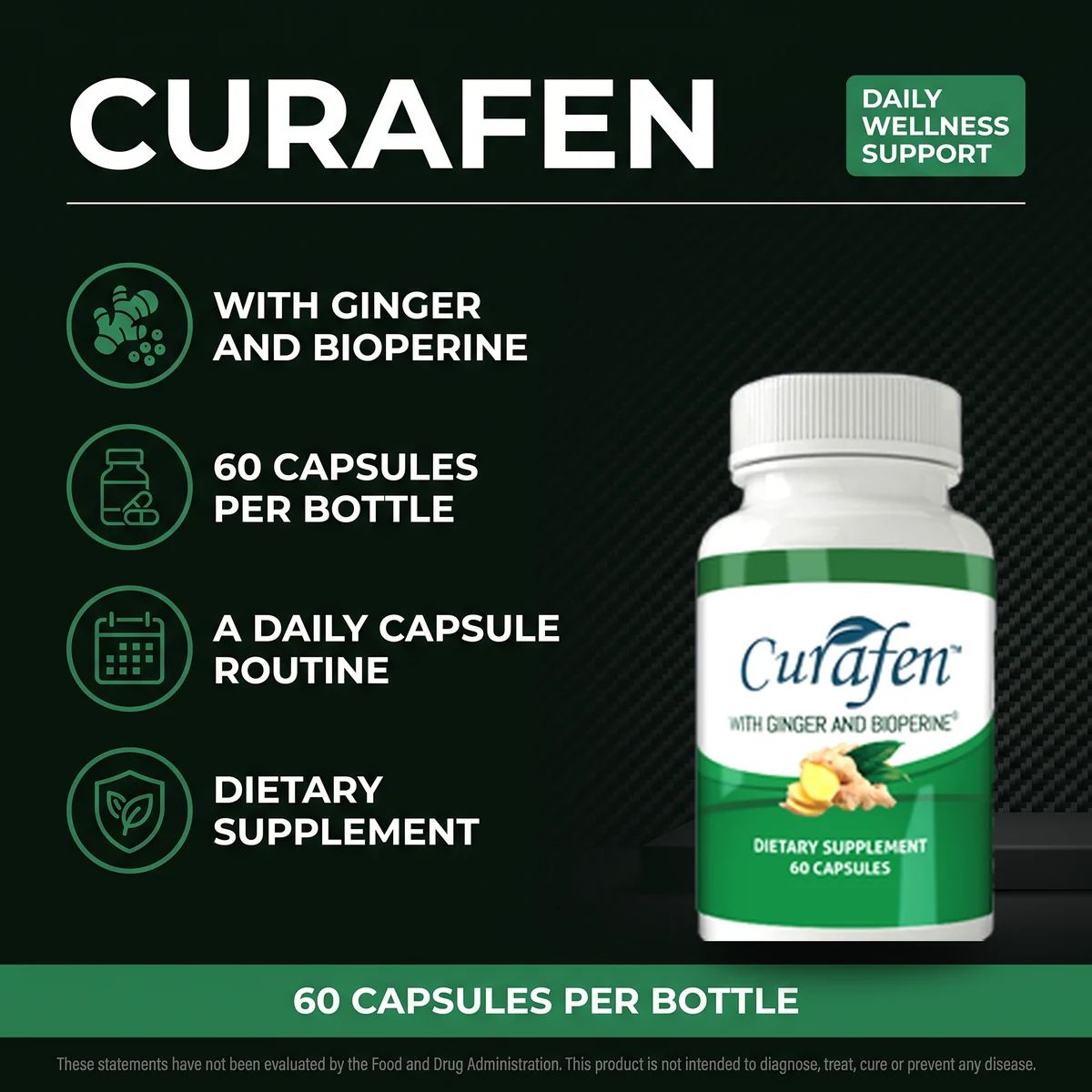
Curafen fits into a flexibility routine as the once-daily supplement step, taken alongside — never instead of — the movement, stretching, hydration and diet that do the real work. It is a focused capsule pairing standardized turmeric (curcumin) with ginger root and BioPerine black-pepper extract, botanicals that have long featured in the everyday joint-wellness conversation. It is a support, not a treatment for any condition, and the ingredients below describe traditional use rather than a medical claim.
| Ingredient | What it is | Traditional / general role |
|---|---|---|
| Turmeric (curcumin) | Antioxidant polyphenol | One of the most researched plant compounds; traditionally used for everyday joint and whole-body wellness. |
| Ginger root | Culinary botanical | Used for centuries in wellness traditions; a natural source of gingerol compounds. |
| BioPerine (piperine) | Black-pepper extract | Included to help the body absorb curcumin, so more of each dose is put to use. |
Curafen keeps the formula short on purpose — three well-known ingredients rather than a long blend. For the mechanism behind the pairing, read our guide to turmeric and curcumin for joint pain, or see how the pepper extract earns its place in BioPerine and curcumin absorption.

Make the supplement step effortless
Curafen is a once-daily capsule pairing turmeric and ginger with BioPerine for absorption. The six-bottle bundle is the best value at $49 per bottle, with free U.S. shipping and a 60-day guarantee.
Check today’s Curafen pricing — from $49/bottleHow do you build a simple weekly flexibility routine?
The best routine is the one you will actually repeat, so build it from small pieces and let them become automatic. A workable week looks like this:
- Move a little every day — a walk, plus standing up to circle your hips, shoulders and ankles once an hour.
- Stretch warm muscles for five minutes daily, holding each easy stretch for 20 to 30 comfortable seconds.
- Add two short strength sessions a week for the muscles around your knees, hips, shoulders and back.
- Keep a water bottle in view and sip through the day so hydration never becomes an afterthought.
- Fill half your plate with plants and cook with turmeric and ginger when you can.
- Take your supplement at the same time daily — for Curafen, one capsule with a meal.
Which flexibility habits work fastest?
A “fast” habit is one you may feel within a session or two; a “slow” habit reshapes your baseline range over weeks. Both matter, and this table sorts the core habits by how quickly most people notice a difference.
| Habit | Typical time to notice | Everyday effort |
|---|---|---|
| Warm up before stretching | Same session | Low |
| Move for 2 minutes each hour | Same day | Low |
| Stay well hydrated | Days | Low |
| Daily 5-minute stretch routine | 2–4 weeks | Low |
| Strength work twice a week | Weeks | Medium |
| Whole-food, colourful diet | Weeks to months | Medium |
Botanicals build their support gradually, so most people choose a multi-month supply to avoid running out mid-routine — compare the packages and pricing on the homepage, or read the full Curafen review first.
When should you talk to a doctor?
Natural habits support comfortable, flexible joints; they are not a replacement for medical care. Speak with your doctor before starting a new routine if you are pregnant or nursing, under 18, take any medication (especially a blood thinner), or have a diagnosed joint condition. Seek advice promptly if a joint is hot, swollen or locked, if pain wakes you at night, or if stiffness keeps getting worse despite gentle movement.
Frequently asked questions
How can I improve joint flexibility naturally?
Move often, add gentle daily stretching and mobility work, build strength around each joint, stay well hydrated and eat a colourful whole-food diet. Consistency matters more than intensity, and well-studied botanicals such as turmeric and ginger, as in Curafen, can support the routine rather than replace it.
How long does it take to become more flexible?
A warm-up loosens joints within the same session, and daily stretching often feels easier within two to four weeks. Larger gains in range of motion usually build over a couple of months of consistent practice, and individual results vary.
Does stretching every day improve flexibility?
For most people gentle daily stretching, especially when the muscles are warm, is one of the most reliable ways to improve and maintain flexibility. A few minutes each day tends to beat one long session per week.
Does hydration affect joint flexibility?
Cartilage and the fluid that lubricates joints are mostly water, so staying well hydrated supports smooth, comfortable movement. Water is a supporting habit alongside movement and diet, not a treatment for any condition.
Where does Curafen fit into a flexibility routine?
Curafen is a once-daily turmeric, ginger and BioPerine capsule taken as the supplement step of a flexibility routine built on movement, stretching, hydration and diet. It supports everyday joint wellness and is not a treatment for any condition.
Can I improve flexibility if I already feel stiff?
Usually yes. Start with gentle, pain-free ranges, warm up first, and build up slowly and consistently. If a joint is hot, swollen, locked or painful at night, see a doctor before starting a new routine.
Try Curafen risk-free for 60 days →
Curafen is a dietary supplement, not a treatment for any medical condition. These statements have not been evaluated by the Food and Drug Administration. This product is not intended to diagnose, treat, cure or prevent any disease. Always consult a qualified healthcare professional about your individual needs.
References & further reading
- National Center for Complementary and Integrative Health (NCCIH). Turmeric. nccih.nih.gov/health/turmeric
- National Center for Complementary and Integrative Health (NCCIH). Ginger. nccih.nih.gov/health/ginger
- Harvard Health Publishing. The importance of stretching. health.harvard.edu/staying-healthy/the-importance-of-stretching
- Mayo Clinic. Stretching: Focus on flexibility. mayoclinic.org/healthy-lifestyle/fitness/in-depth/stretching
- Ingram LA, Tomkinson GR, d’Unienville NMA, et al. Mechanisms underlying range of motion improvements following acute and chronic static stretching: a systematic review, meta-analysis and multivariate meta-regression. Sports Medicine, 2025. Ingram et al. — Static stretching and range of motion (Sports Medicine, 2025)
- Examine.com. Curcumin — evidence-based summary. examine.com/supplements/curcumin
These references describe the ingredients and habits in general terms and do not constitute evidence that any product treats, cures or prevents any condition.
Keep reading: how to support healthy joints naturally · the best foods to ease joint pain · back to the Curafen blog · homepage.