MSM supplement for joint pain vs turmeric: how Curafen compares

Updated September 2026 · reviewed by the Curafen Research Team. We are an independent information resource, not a medical provider, and this article is educational rather than medical advice.
MSM and turmeric are two of the most popular natural options people reach for when joints ache, but they work in very different ways: MSM is a sulfur compound taken for everyday joint comfort, while turmeric supplies curcumin, a well-studied antioxidant polyphenol. This guide weighs an MSM supplement for joint pain against the turmeric approach, and explains why Curafen is built around standardized curcumin with ginger and BioPerine rather than MSM.
MSM vs turmeric for joint pain, honestly summarised.
- The short version
- Both are supports, not treatments, and the human evidence is mixed for each. Turmeric's curcumin has the larger joint-comfort research base, which is why Curafen chose it over MSM.
- What MSM is
- Methylsulfonylmethane, a sulfur-containing compound sold as powder or capsules; popular, but with limited and inconsistent human trials.
- What turmeric offers
- Curcumin, one of the most researched plant polyphenols, traditionally used for everyday joint and whole-body wellness.
- Curafen's choice
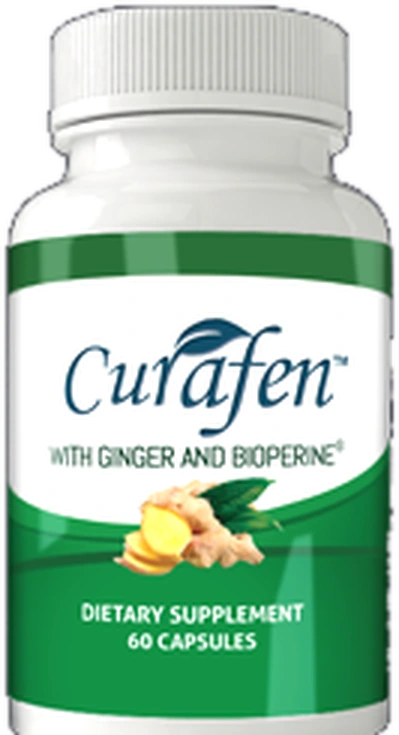
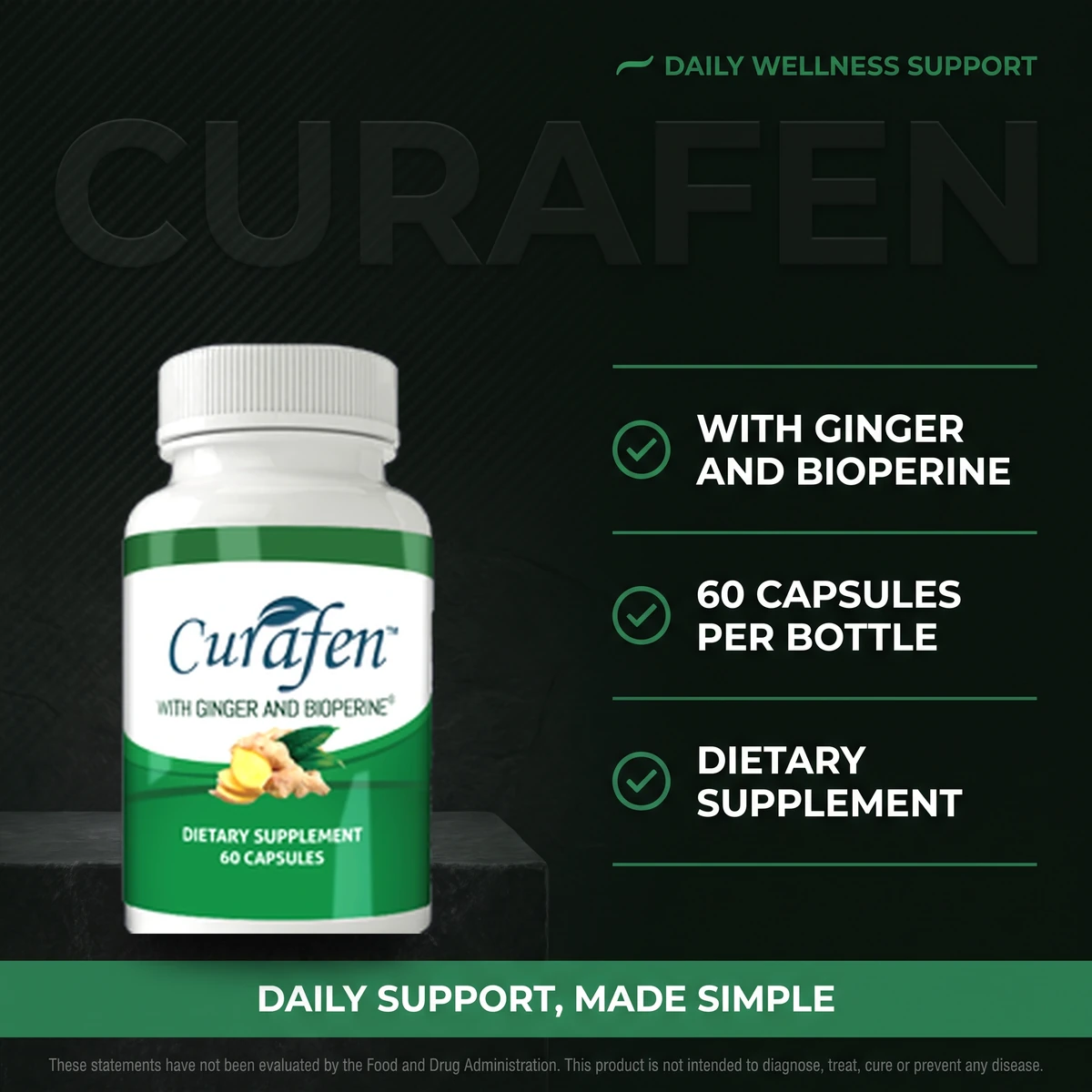
- Standardized turmeric curcumin plus ginger and BioPerine (black-pepper piperine) to improve curcumin's famously low absorption.
What is MSM, and what is turmeric?
MSM (methylsulfonylmethane) is a naturally occurring, sulfur-containing compound sold as a supplement and taken chiefly for everyday joint comfort, while turmeric is a golden kitchen spice whose active fraction, curcumin, is a widely studied antioxidant polyphenol. In other words, they sit in different categories entirely: one is a small sulfur molecule, the other a plant pigment. That distinction matters, because when people ask whether to take an MSM supplement for joint pain or a turmeric one, they are really comparing two separate ideas about how to support aging joints. For the longer version, see our guide to whether turmeric is good for arthritis.
MSM provides a bioavailable source of sulfur, a mineral the body uses in connective tissue and in its own antioxidant systems. Turmeric works through curcumin's polyphenol chemistry, which is why turmeric is discussed alongside other colourful, antioxidant-rich plants. Neither is a drug, and neither should be described as a cure — both belong to the wellness conversation, not the pharmacy.
MSM vs turmeric for joint pain: what does the evidence say?
The most honest summary is that the human evidence is mixed for both MSM and turmeric, but turmeric's curcumin has the larger and more consistent body of joint-comfort research. Enthusiasm often runs ahead of the data on any single joint ingredient, so it helps to look at what independent reviewers actually report rather than marketing claims.
What does the research show for MSM?
MSM for joints is popular but under-studied: a handful of small human trials have explored it for everyday joint comfort, yet independent reviewers such as Examine describe the overall evidence as limited, short-term and inconsistent, with more research needed before firm conclusions can be drawn. That does not make MSM useless — it means the case for it rests on a thinner foundation than many labels imply. If you are drawn to MSM, treat it as an experiment to discuss with your doctor, not a settled answer.
What does the research show for turmeric and curcumin?
Turmeric's active curcumin is one of the most researched plant compounds in the wellness world, with numerous human studies examining it for joint comfort and general antioxidant support. Reviewers still urge caution — study quality varies and curcumin absorbs poorly on its own — but the literature is deeper and more encouraging than MSM's. This weight of research, paired with a clear antioxidant mechanism, is a key reason Curafen is a turmeric formula. You can go deeper in our guide to turmeric and curcumin for joint pain.
| Factor | MSM | Turmeric (curcumin) |
|---|---|---|
| What it is | Sulfur-containing compound | Antioxidant plant polyphenol |
| Proposed role | Supplies dietary sulfur; everyday joint comfort | Antioxidant support; everyday joint & whole-body wellness |
| Human research base | Limited, short-term, inconsistent | Larger and more studied, though quality varies |
| Absorption issue | Generally well absorbed | Poor on its own — needs piperine or a delivery system |
| In Curafen? | No | Yes — standardized, with ginger & BioPerine |
MSM vs curcumin: how do they actually work?
The mechanisms behind MSM and curcumin are genuinely different, which is why "MSM vs curcumin" is not a like-for-like race. MSM's proposed benefit centres on delivering sulfur, a building block your body uses in connective tissue and in glutathione, one of its own antioxidant molecules. Curcumin's story is about polyphenol chemistry — it is studied for how it interacts with the body's oxidative and signalling pathways as part of a normal, healthy response.
Because the two act through separate routes, choosing between them is less about which is "stronger" and more about which approach has the research and formulation behind it. Curafen's position is that a standardized, well-absorbed curcumin — supported by ginger, another traditional joint botanical — is the more evidence-aligned starting point for most people exploring natural joint comfort.
See the exact dose in Curafen
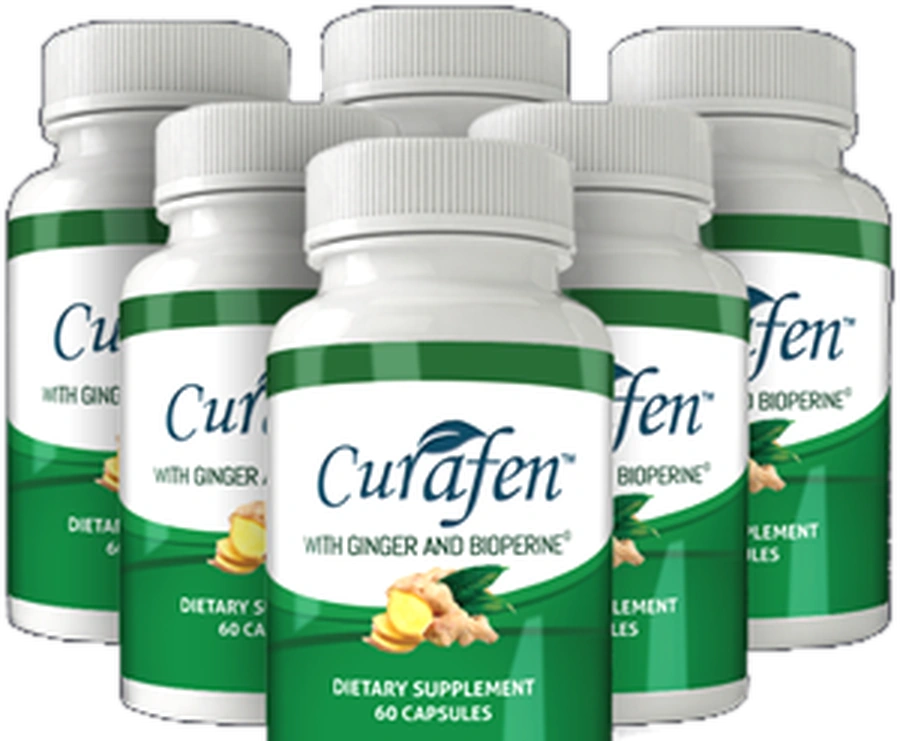
Rather than guess at MSM powder, Curafen delivers a fixed, once-daily capsule of standardized curcumin with ginger and BioPerine. The six-bottle bundle is the best value at $49 per bottle, with free U.S. shipping and a 60-day guarantee.
Check today’s Curafen pricing — from $49/bottleWhy does Curafen use standardized curcumin instead of MSM?
Curafen uses standardized turmeric curcumin, ginger and BioPerine instead of MSM because that combination pairs the deeper research base of curcumin with a practical fix for its biggest weakness — absorption. Plain turmeric is famously hard for the body to take up, so a curcumin supplement is only as useful as the amount that actually gets absorbed.
BioPerine, a black-pepper extract standardized for piperine, is included specifically to help the body absorb more of each curcumin dose. Ginger root adds a second traditional joint-and-digestive botanical that complements turmeric in both kitchens and supplements. The result is a focused, once-daily capsule rather than a long, under-dosed blend. For the ingredient-by-ingredient breakdown, see the Curafen ingredients section or our fuller Curafen review.
Can you take MSM and turmeric together?
Many joint blends do combine MSM and turmeric, and there is no widely reported interaction between the two, so taking them together is common. But more ingredients is not automatically better — large "kitchen-sink" blends often under-dose each component to fit everything on the label. Curafen's approach is the opposite: concentrate on a smaller number of well-researched ingredients and dose them meaningfully, so that curcumin, ginger and BioPerine each pull their weight.
If you already take an MSM product and want to add turmeric, or vice versa, that is a reasonable question for your doctor or pharmacist. Supplements support a healthy routine; they do not replace medical guidance.
How do you choose between MSM for joints and turmeric?
Choosing between MSM and turmeric comes down to which factors matter most to you: depth of research, absorption, dosing convenience and how the ingredient fits a wider routine. The table below lines up the practical trade-offs so you can decide with clear eyes rather than hype.
| If you care about… | MSM | Turmeric / Curafen |
|---|---|---|
| Size of the research base | Smaller, less consistent | Larger; among the most-studied botanicals |
| Ease of a fixed daily dose | Often loose powder to measure | One standardized capsule per day |
| Absorption handled for you | Absorbs well but taken alone | Paired with BioPerine to aid uptake |
| A broader botanical routine | Single ingredient | Turmeric + ginger together |
| An honest evidence stance | Promising but unproven | Encouraging but still a support, not a cure |
Whichever you lean toward, the everyday basics do the heavy lifting: regular gentle movement, a healthy weight and a colourful, whole-food diet. A supplement is the smaller final step — our guide to supporting healthy joints naturally puts it in context, and the homepage lists the Curafen packages and pricing.

When should you talk to a doctor?
Natural options like MSM and turmeric support comfortable joints; they are not a replacement for medical care. Speak with your doctor before starting either — and certainly before combining them — if you are pregnant or nursing, under 18, take any medication (especially a blood thinner), have a diagnosed condition, or notice a hot, swollen or locked joint, pain that wakes you at night, or discomfort that keeps getting worse.
Frequently asked questions
Is MSM or turmeric better for joint pain?
Neither is a proven treatment, and the honest answer is that the evidence is mixed for both. Turmeric’s active curcumin has a larger body of human joint-comfort research than MSM, which is why Curafen builds its formula around standardized curcumin rather than MSM. Both are supports to movement and diet, not replacements for medical care.
What is an MSM supplement for joint pain?
MSM (methylsulfonylmethane) is a sulfur-containing compound sold as a powder or capsule and often taken for everyday joint comfort. It is one of the more popular single-ingredient joint supplements, but the human research remains limited and inconsistent, so it is best viewed as an option to discuss with your doctor rather than a guaranteed solution.
Can you take MSM and turmeric together?
Many people do combine MSM and turmeric, and some joint blends pair them. There is no widely reported interaction between the two, but stacking more single ingredients is not automatically better. Curafen instead focuses on standardized curcumin, ginger and BioPerine so each dose is well absorbed; ask your doctor before combining supplements, especially with medication.
Why does Curafen use turmeric instead of MSM?
Curafen is built around standardized turmeric curcumin because curcumin has one of the largest research literatures of any joint-wellness botanical and a clear mechanism as an antioxidant polyphenol. Curafen also adds ginger and BioPerine (black-pepper piperine) to help the body absorb curcumin, addressing the low bioavailability that limits plain turmeric.
How long does MSM or turmeric take to work?
Botanical and sulfur-based joint supplements generally build their support gradually rather than overnight. Most studies and product routines run over several weeks to a few months, and individual results vary. Consistent daily use, alongside movement and a healthy weight, tends to matter more than any single dose.
Is MSM the same as glucosamine or curcumin?
No. MSM is a sulfur compound, glucosamine is a building block found in cartilage, and curcumin is a plant polyphenol from turmeric. They are three different ingredients with different proposed mechanisms, which is why comparing MSM with turmeric is really a comparison of two distinct approaches to everyday joint comfort.
See the exact dose in Curafen — try it risk-free for 60 days →
Curafen is a dietary supplement, not a treatment for any medical condition. These statements have not been evaluated by the Food and Drug Administration. This product is not intended to diagnose, treat, cure or prevent any disease. Always consult a qualified healthcare professional about your individual needs.
References & further reading
- National Center for Complementary and Integrative Health (NCCIH). Turmeric. nccih.nih.gov/health/turmeric
- Examine.com. MSM (Methylsulfonylmethane) — evidence-based summary. examine.com/supplements/msm
- Examine.com. Curcumin — evidence-based summary. examine.com/supplements/curcumin
- Kim LS, Axelrod LJ, Howard P, Buratovich N, Waters RF. Efficacy of methylsulfonylmethane (MSM) in osteoarthritis pain of the knee: a pilot clinical trial. Osteoarthritis and Cartilage, 2006. Kim et al. — Methylsulfonylmethane in knee osteoarthritis pain (Osteoarthritis and Cartilage, 2006)
- Kuptniratsaikul V, Thanakhumtorn S, Chinswangwatanakul P, Wattanamongkonsil L, Thamlikitkul V. Efficacy and safety of Curcuma domestica extracts in patients with knee osteoarthritis. Journal of Alternative and Complementary Medicine, 2009. Kuptniratsaikul et al. — Curcuma domestica extracts in knee osteoarthritis (J Altern Complement Med, 2009)
- National Center for Complementary and Integrative Health (NCCIH). Ginger. nccih.nih.gov/health/ginger
These references describe the ingredients in general terms and do not constitute evidence that any product treats, cures or prevents any condition.
Keep reading: how turmeric and curcumin work · supporting healthy joints naturally · back to the Curafen blog · the full Curafen review.