Joint pain in cold weather: the Curafen explainer

Updated September 2026 · reviewed by the Curafen Research Team. We are an independent information resource, not a medical provider, and this article is educational rather than medical advice.
Joint pain in cold weather is the familiar rise in stiffness and achiness many people feel when the temperature drops or a damp front rolls in. It happens mostly because cold tightens the soft tissue around a joint and because we move less — not because the cold harms the joint itself. The good news: warmth, steady movement and a few supportive habits, including a consistent turmeric routine, can keep you comfortable through the coldest months.
Why joints ache when it turns cold, in one place.
- The short version
- Cold makes the tissue around a joint less pliable, and people move less, so joints feel stiffer — usually a comfort issue, not damage.
- Pressure theory
- Falling barometric pressure before a front may let tissues expand slightly; the evidence is mixed, so treat it as real for some, not a settled fact.
- Fastest relief
- Warmth plus gentle movement — a warm shower, layers and a few minutes of easy mobility work — is what most people notice first.
- Where Curafen fits
- A daily turmeric, ginger and BioPerine capsule can support the routine, but it is not a treatment for any condition and results vary.
Almost everyone with occasional stiff knees, hips or hands has noticed it: the first cold, grey morning of the season, and the joints protest a little louder. Below we walk through what is really going on, what the evidence supports, and the practical steps — including where a formula like Curafen can play a supporting role.

Why do joints ache in cold weather?
Joints ache in cold weather mainly because cold makes the soft tissues around a joint less flexible, and because reduced winter activity lets joints stiffen. A joint is where two bones meet, cushioned by cartilage, lubricated by a thin layer of synovial fluid, and wrapped in muscles and tendons. When the surrounding tissue is warm and moving it glides easily; when it is cold and still, everything feels tighter. That combination — colder tissue plus less movement — explains most of the seasonal ache, and neither means the joint is being harmed.
What actually changes inside a joint when temperatures drop?
When temperatures drop, several small changes stack up around a joint to make it feel stiffer, even though the joint structure itself is unchanged.
Does barometric pressure really affect joints?
Barometric pressure is the weight of the air pressing on the body, and it often falls before cold or stormy weather. One long-standing theory holds that when outside pressure drops, tissues around a joint expand very slightly, nudging sensitive nerve endings. But the research is genuinely mixed — some studies find a small link, others none — so the effect, if real, is modest and varies from person to person.
How does cold stiffen the tissue around a joint?
Cold reduces blood flow to the skin and extremities as the body conserves core heat, and cooler muscles and tendons are less elastic. Synovial fluid, the joint's lubricant, is also thought to thicken slightly when cold, a little like oil on a chilly morning. The whole system moves less freely until it warms up.
Why does less winter movement make it worse?
Behaviour may be the biggest hidden factor of all. When it is cold, dark and icy, people walk less, skip the gym and sit longer indoors. Joints dislike being still: gentle, regular loading is what circulates synovial fluid and keeps cartilage nourished. So a quieter winter routine compounds the stiffness the cold started, a cycle easy to mistake for the weather alone.

What does the evidence actually say about weather and joints?
The honest scientific position is that weather can influence how joints feel for some people, but the effect is small and inconsistent across studies. Surveys find people firmly believe cold or damp weather worsens their symptoms, yet controlled studies tracking real weather against reported discomfort produce conflicting results. Lived experience and hard data do not fully line up. The table below sorts the leading explanations by how well they are supported.
| Proposed factor | How it might work | Strength of evidence |
|---|---|---|
| Reduced movement | Less activity in winter lets joints stiffen and cartilage go under-used | Strong — inactivity is well known to increase stiffness |
| Colder soft tissue | Muscles, tendons and fluid become less pliable when cold | Reasonable — consistent with basic physiology |
| Barometric pressure | Falling pressure may let tissues expand slightly around nerves | Mixed — some studies suggest a small link, others none |
| Humidity & damp | Often reported alongside cold, but hard to separate from it | Weak — largely based on self-report |
| Lower mood & sleep | Shorter, darker days can amplify how discomfort is perceived | Indirect — plausible but not weather-specific |
The takeaway is not to dismiss cold-weather aches, but to focus on the factors you can influence — movement, warmth, weight and a supportive routine — rather than the forecast. See our guide to supporting healthy joints naturally.

Keep your routine steady through winter
Curafen pairs turmeric and ginger with BioPerine for absorption — an easy habit to keep when the cold makes everything harder. See the exact dose in Curafen and today's pricing.
Check today's Curafen pricing — from $49/bottleHow can you keep joints comfortable through the cold months?
The most effective cold-weather strategy is to combine warmth with steady movement, so tissues stay pliable and joints keep their normal range. None of the following is a treatment for any condition, but together these habits address the factors most likely driving the seasonal ache.
How much does staying warm help?
Keeping the joints and surrounding tissue warm is one of the simplest and most immediate steps. Dress in layers, cover the hands and knees on cold outings, and use a warm shower, bath or heat pack to loosen a stiff area before activity. Warmth increases local blood flow and makes muscles and tendons more elastic.
Should you keep moving when it is cold?
Regular gentle movement is the single best defence against winter stiffness, because motion keeps a joint lubricated and its muscles strong. Break up long sitting every hour, take a daily walk when conditions are safe, and move indoors on icy days. Warm up a little longer than in summer, since cold tissue needs more time to loosen.

Do food and hydration matter in winter?
A colourful, whole-food eating pattern gives the body the raw materials it uses for everyday wellness, and it is easy to let this slide in comfort-food season. Lean toward vegetables, fruit, whole grains, beans, nuts, olive oil and oily fish, and keep drinking water even when you do not feel thirsty — cold blunts thirst, and mild dehydration does joints no favours.
| Winter habit | What it targets | When you may notice it |
|---|---|---|
| Warm shower or heat pack before activity | Cold, stiff soft tissue | Same session |
| Dress in layers, cover knees and hands | Heat loss from joints | Same day |
| Move for two minutes each hour | Stiffness from sitting | Same day |
| Daily indoor or outdoor walk | Joint lubrication & strength | Days |
| Colourful, whole-food meals | Everyday wellness support | Days to weeks |
| Consistent turmeric routine | General joint-wellness support | Weeks (builds gradually) |
Where does a Curafen routine fit in cold weather?
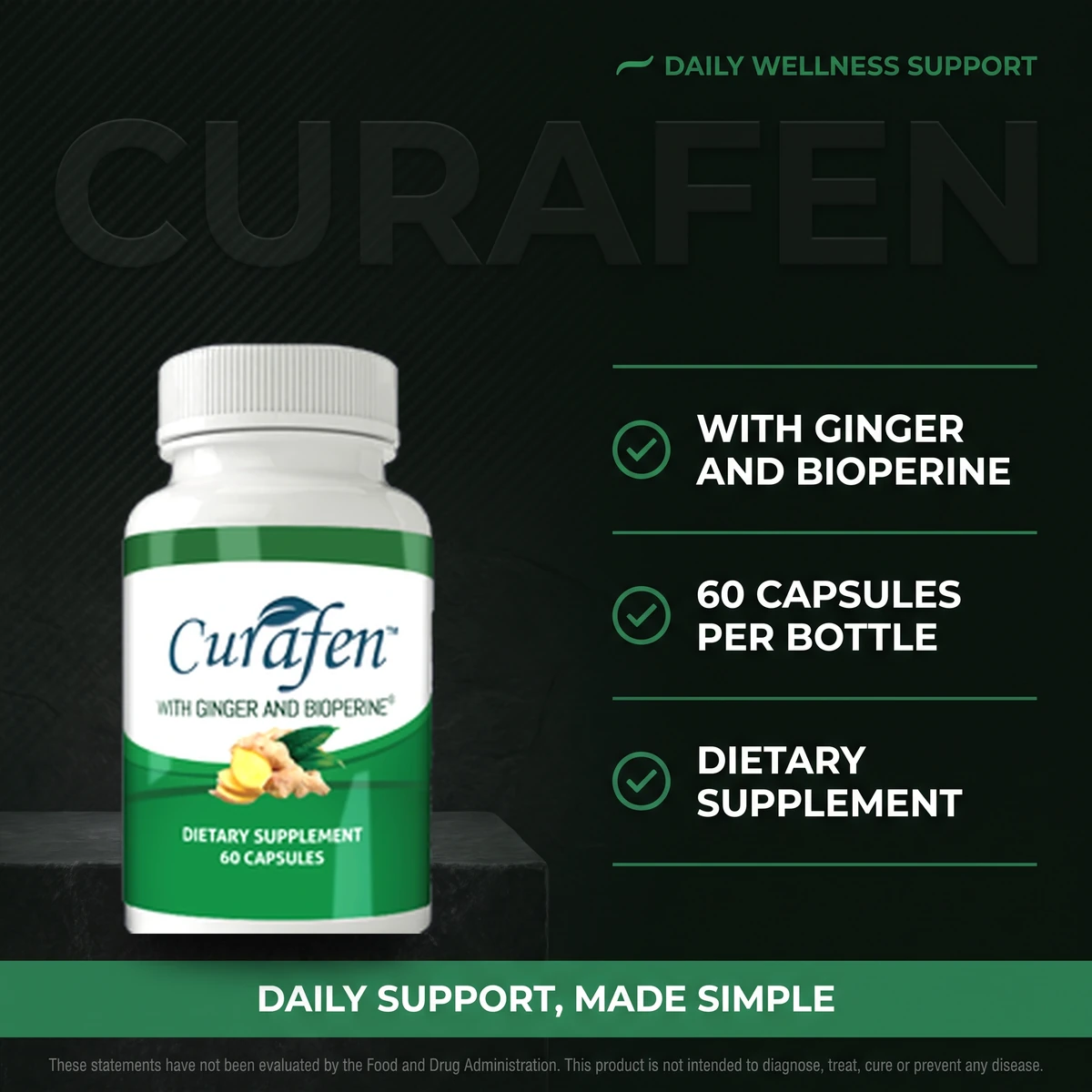
Curafen fits winter comfort as a small, steady daily habit that supports the routine rather than replacing warmth, movement or medical care. It is a once-daily capsule bringing together standardized turmeric (curcumin), ginger root and BioPerine black-pepper extract. Curcumin is one of the most studied plant polyphenols and has long featured in the joint-wellness conversation, and BioPerine helps the body absorb more of each curcumin dose. Because botanicals build support gradually, a supplement's value in winter is consistency — a habit easy to keep even on hard days.
To be clear, no supplement changes the weather or overrides the basics, and Curafen is not a treatment for arthritis or any condition. For the mechanism in depth, our explainer on turmeric and curcumin for joint pain covers how curcumin is thought to work, or read the full Curafen review.
When should you see a doctor about winter joint pain?
Cold-weather stiffness that eases once you warm up and get moving is usually a comfort issue, not a warning sign. See a doctor, though, if joint pain is severe, keeps worsening, wakes you at night, or comes with a hot, red, swollen or locked joint, fever, or unexplained weight loss. Also check in before any new supplement if you are pregnant or nursing, under 18, take medication such as a blood thinner, or have a diagnosed condition. Persistent pain deserves a proper assessment.
Frequently asked questions
Why do joints ache more in cold weather?
Cold tends to tighten the muscles, tendons and fluid around a joint, and people naturally move less when it is cold, so joints feel stiffer. Changes in barometric pressure may also play a role for some people. The joint is not being damaged by the cold; it usually just feels less limber.
Does cold weather actually damage your joints?
For most people cold weather causes temporary stiffness and discomfort rather than lasting damage. The tissues become less pliable and movement drops, both of which ease once you warm up and get moving. Persistent or worsening pain is worth discussing with a doctor.
Can barometric pressure changes make joints hurt?
Many people report that joints ache before a weather front, and one theory is that falling barometric pressure lets tissues around the joint expand slightly. The research is mixed and the effect, if present, is small, so it is best treated as a real experience for some people rather than a settled fact.
What is the fastest way to ease cold-weather joint stiffness?
Warm up the area and start moving gently. A warm shower, layered clothing, a few minutes of easy mobility work and staying active indoors all help tissues loosen. Warmth plus movement is the combination most people notice first.
Does turmeric help with winter joint comfort?
Turmeric’s active curcumin is a well-studied plant polyphenol traditionally used for everyday joint wellness, and it absorbs far better when paired with black-pepper piperine, as in Curafen. It is a support to warmth, movement and diet, not a treatment for any condition, and results vary.
Should I keep exercising when it is cold?
Yes, for most people staying active through winter is one of the best things for joints, because gentle loading keeps them limber. Warm up a little longer than usual, dress in layers, and move indoors on icy days to stay safe.
See the exact dose in Curafen →
Curafen is a dietary supplement, not a treatment for any medical condition. These statements have not been evaluated by the Food and Drug Administration. This product is not intended to diagnose, treat, cure or prevent any disease. Always consult a qualified healthcare professional about your individual needs.
References & further reading
- National Center for Complementary and Integrative Health (NCCIH). Turmeric. nccih.nih.gov/health/turmeric
- National Center for Complementary and Integrative Health (NCCIH). Ginger. nccih.nih.gov/health/ginger
- Mayo Clinic. Arthritis pain: Do's and don'ts. mayoclinic.org/diseases-conditions/arthritis
- Ferreira ML, Hunter DJ, Fu A, et al. Come rain or shine: is weather a risk factor for musculoskeletal pain? A systematic review with meta-analysis of case-crossover studies. Seminars in Arthritis and Rheumatism, 2024. Ferreira et al. — Weather as a risk factor for musculoskeletal pain (Semin Arthritis Rheum, 2024)
- Examine.com. Curcumin — evidence-based summary. examine.com/supplements/curcumin
These references describe the ingredients and habits in general terms and do not constitute evidence that any product treats, cures or prevents any condition.
Keep reading: support healthy joints naturally · gentle joint exercises for mobility · the Curafen blog · homepage.