Fish oil supplements for joint pain vs turmeric: how Curafen compares

Updated September 2026 · reviewed by the Curafen Research Team. We are an independent information resource, not a medical provider, and this article is educational rather than medical advice.
Fish oil and turmeric are the two most common natural choices for everyday joint comfort, and they work in different ways: fish oil supplies omega-3 fats (EPA and DHA) that support a balanced inflammatory response, while turmeric's curcumin is an antioxidant plant polyphenol traditionally used to help joints feel comfortable and mobile. Neither is a treatment for any condition, and many people use them side by side rather than picking one — which is where a turmeric-led formula like Curafen fits the picture.
Fish oil vs turmeric for joints, honestly summarised.
- The short version
- They are not rivals so much as different tools: omega-3 fish oil is a dietary fat, turmeric's curcumin is a polyphenol, and both are supports rather than treatments.
- Fish oil's role
- Provides EPA and DHA, the long-chain omega-3s that a balanced, anti-inflammatory eating pattern is built around.
- Turmeric's role
- Delivers curcumin, one of the most-studied plant compounds, traditionally used for everyday joint and whole-body wellness.
- Where Curafen sits
- It is a turmeric-led, vegetarian capsule pairing standardized curcumin with ginger and BioPerine for absorption — not a fish-oil product.
If you have stood in the supplement aisle holding fish oil in one hand and turmeric in the other, this guide is for you. Below we compare what each one is, how the evidence reads in plain language, and how a three-active turmeric formula like Curafen approaches the same goal from a different angle.

What is the difference between fish oil and turmeric for joints?
The core difference is that fish oil is a source of essential fats while turmeric is a source of a plant polyphenol, so they support joint wellness through separate pathways. Fish oil delivers the long-chain omega-3s EPA and DHA, which the body builds into cell membranes and uses to make signalling molecules that help keep the inflammatory response in balance. Turmeric delivers curcumin, an antioxidant compound studied for its role in everyday joint comfort. Because one is a fat and the other a polyphenol, they are better understood as complementary partners than head-to-head substitutes.
How does omega-3 fish oil support joints?
Omega-3 for joints works by supplying EPA and DHA, the marine fats a balanced anti-inflammatory eating pattern depends on. Your body cannot make meaningful amounts of these long-chain omega-3s, so they come from oily fish such as salmon, sardines and mackerel, or from a supplement. Once absorbed, they become part of your cell membranes and help keep normal inflammatory signalling in balance — which is why health bodies encourage a couple of servings of oily fish each week.
Is the fish oil evidence strong?
It is worth being honest: research on fish oil and joint comfort is mixed, dose matters, and quality between products varies widely. Fish oil is a support to a healthy diet, not a treatment for any joint condition, and people who dislike seafood, follow a plant-based diet, or take blood-thinning medication have practical reasons to look at alternatives.

How does turmeric and curcumin support joints?
Turmeric supports joints through curcumin, the golden polyphenol that gives the spice its colour and its long history in wellness traditions. Curcumin is one of the most extensively researched natural compounds, valued as an antioxidant and traditionally used for everyday joint and whole-body comfort. Unlike fish oil, it is entirely plant-based — a natural fit for vegetarians and anyone who would rather skip a fishy aftertaste.
Why does curcumin need black pepper?
Curcumin's one real weakness is absorption: on its own, the body takes up very little of it, which is why quality turmeric formulas pair it with black-pepper extract. The piperine in black pepper is included to help the body absorb curcumin, so more of each dose is put to use rather than passing straight through. Our guide on curcumin absorption and bioavailability walks through why this pairing matters.
Fish oil vs turmeric: a side-by-side comparison
A side-by-side view makes the trade-offs clear: fish oil and turmeric differ in what they are, where they come from, and who prefers each. The table below sums up the practical differences.
| Factor | Omega-3 fish oil | Turmeric (curcumin) |
|---|---|---|
| What it is | Essential marine fats (EPA & DHA) | Antioxidant plant polyphenol |
| Source | Oily fish — salmon, sardines, mackerel | Turmeric root, a culinary spice |
| Main appeal | Part of a balanced anti-inflammatory diet | Traditional support for everyday joint comfort |
| Absorption note | Generally well absorbed with food | Poor alone; paired with piperine to help uptake |
| Diet fit | Not for vegetarians or seafood-avoiders | Vegetarian and plant-based friendly |
| Common drawbacks | Fishy aftertaste, quality varies | Needs an absorption partner to be useful |
Notice that most entries complement rather than contradict each other — which is why so many people stop treating this as an either/or decision.
See the exact dose in Curafen →
Where does Curafen fit between fish oil and turmeric?
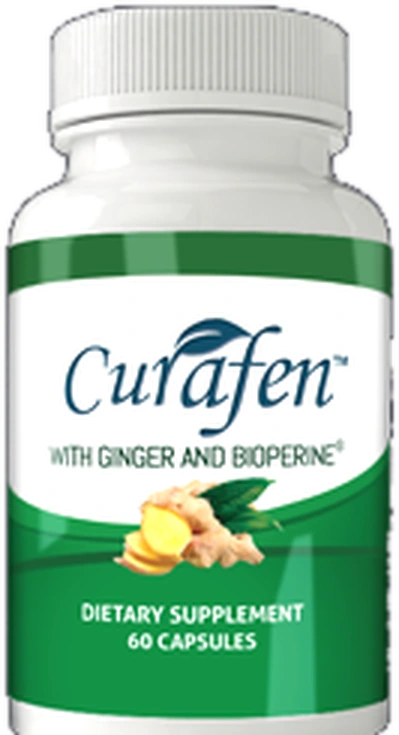
Curafen sits firmly on the turmeric side, but it is built to fix turmeric's biggest weakness rather than pile on more spice. It is a once-daily, vegetarian capsule bringing together three actives: standardized turmeric (curcumin) for the polyphenol itself, ginger root as a complementary botanical, and BioPerine black-pepper extract to help the body absorb the curcumin. Because it contains no fish oil, it is a natural choice for vegetarians, anyone who avoids seafood, or people who cannot stand a fishy burp.

Which should vegetarians choose?
The three-active approach is the point: rather than a long, thin blend, Curafen concentrates on curcumin and the two partners that make it more useful. Ginger adds its own traditional joint-wellness heritage — more in our guide to ginger root for joint comfort — while BioPerine addresses the absorption gap that leaves so many plain turmeric capsules underwhelming. If you eat oily fish or take a separate omega-3, Curafen slots in alongside it, covering the turmeric angle fish oil does not.
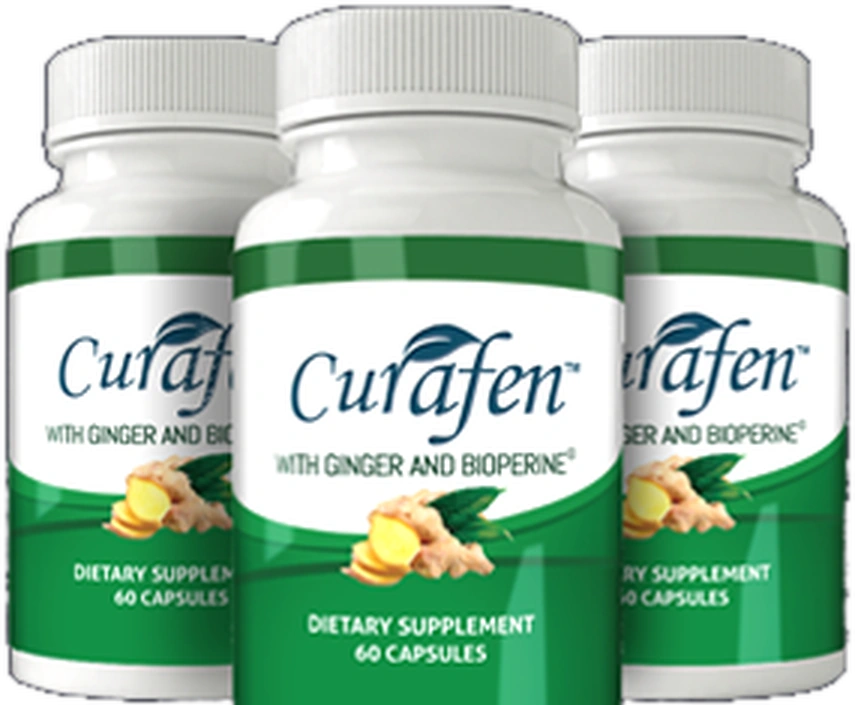
The turmeric side, done properly
Curafen is a once-daily capsule pairing standardized turmeric and ginger with BioPerine for absorption — no fish oil, fully vegetarian. Multi-bottle bundles offer the best value with free U.S. shipping and a 60-day guarantee.
Check today's Curafen pricing →Can you take fish oil and turmeric together?
For most healthy adults, fish oil and turmeric are commonly taken together because they support wellness through entirely different routes. Omega-3s work as dietary fats built into your cells, while curcumin works as an antioxidant polyphenol, so combining them layers two complementary supports. In practice, many people cover omega-3s through oily fish a couple of times a week and take a turmeric capsule such as Curafen daily.
There is one shared caution worth repeating: both fish oil and turmeric can influence blood thinning. Anyone on an anticoagulant medication, preparing for surgery, or who is pregnant or nursing should talk to a doctor before combining them or starting either one. This is sensible caution, not alarm.
How do you choose between them for your routine?
Choosing between fish oil and turmeric comes down to your diet, your preferences and what you can realistically keep taking every day. The quick decision guide below matches common situations to the more natural starting point — the best supplement is the one you stay consistent with.
| If you... | A natural starting point | Why |
|---|---|---|
| Are vegetarian or avoid seafood | Turmeric (Curafen) | Plant-based, no fish-derived ingredients |
| Already eat oily fish weekly | Turmeric (Curafen) | Adds the turmeric angle your diet misses |
| Dislike a fishy aftertaste | Turmeric (Curafen) | Odourless capsule, no fish burp |
| Rarely eat fish and want omega-3s | Fish oil (or diet) | Fills a genuine dietary gap in EPA/DHA |
| Want to cover both angles | Both, spaced out | Different pathways, commonly combined |
| Take a blood thinner | Ask your doctor first | Both can affect blood thinning |
Whichever way you lean, movement, a healthy weight and a colourful diet still do the heavy lifting — see how to support healthy joints naturally. Supplements sit on top of those foundations, never in place of them.
When should you talk to a doctor?
Natural supplements support comfortable, healthy joints, but they are not a substitute for medical care, and neither fish oil nor turmeric treats any condition. Speak with your doctor before starting either if you are pregnant or nursing, under 18, take any medication — especially a blood thinner — or have a diagnosed health condition. See a professional promptly for a hot, swollen or locked joint, pain that wakes you at night, or discomfort that keeps getting worse. We unpack MSM versus turmeric for joint pain in a separate explainer.
Frequently asked questions
Is fish oil or turmeric better for joints?
Neither is universally better — they work differently. Omega-3 fish oil supplies EPA and DHA fats that support a balanced inflammatory response, while turmeric’s curcumin is an antioxidant polyphenol traditionally used for everyday joint comfort. Many people use them as complements rather than choosing one, and results vary.
What is the difference between omega-3 for joints and curcumin for joints?
Omega-3s are essential fats from oily fish that the body builds into cell membranes and signalling molecules, whereas curcumin is a plant polyphenol from turmeric root. They act through different pathways, so they are often discussed as partners in a joint-wellness routine rather than direct substitutes.
Can you take fish oil and turmeric together?
For most healthy adults the two are commonly taken together, since they support wellness through different routes. Both can affect blood thinning, so anyone on anticoagulant medication, pregnant or nursing, or preparing for surgery should check with a doctor first.
Does Curafen contain fish oil?
No. Curafen is a vegetarian, once-daily capsule built around standardized turmeric (curcumin), ginger root and BioPerine black-pepper extract for absorption. It does not contain fish oil, so people who prefer a plant-based option or avoid seafood can still take it, and omega-3s can be added separately from diet or a fish-oil supplement.
Why does Curafen add BioPerine instead of more turmeric?
Curcumin on its own is poorly absorbed, so simply adding more turmeric does not guarantee the body uses more of it. BioPerine (piperine) from black pepper is included to help the body absorb curcumin, so more of each dose is put to work rather than passing through.
How long before fish oil or turmeric makes a difference to joints?
Both botanicals and omega-3s build their support gradually rather than overnight, and most people allow several weeks of consistent daily use before judging how they feel. Individual results vary, and neither is a treatment for any joint condition.
Try Curafen risk-free for 60 days →
Curafen is a dietary supplement, not a treatment for any medical condition. These statements have not been evaluated by the Food and Drug Administration. This product is not intended to diagnose, treat, cure or prevent any disease. Always consult a qualified healthcare professional about your individual needs.
References & further reading
- National Institutes of Health, Office of Dietary Supplements. Omega-3 Fatty Acids — Fact Sheet for Health Professionals. ods.od.nih.gov/factsheets/Omega3FattyAcids-HealthProfessional
- National Center for Complementary and Integrative Health (NCCIH). Turmeric. nccih.nih.gov/health/turmeric
- National Center for Complementary and Integrative Health (NCCIH). Omega-3 Supplements: In Depth. nccih.nih.gov/health/omega3-supplements-in-depth
- Examine.com. Curcumin — evidence-based summary. examine.com/supplements/curcumin
- Examine.com. Fish Oil — evidence-based summary. examine.com/supplements/fish-oil
- Senftleber NK, Nielsen SM, Andersen JR, et al. Marine oil supplements for arthritis pain: a systematic review and meta-analysis of randomized trials. Nutrients, 2017. Senftleber et al. — Marine oil supplements for arthritis pain (Nutrients, 2017)
These references describe the ingredients in general terms and do not constitute evidence that any product treats, cures or prevents any condition.
Keep reading: how turmeric and curcumin work for joint pain · the best foods to ease joint pain · read the full Curafen review · back to the Curafen blog.